Conditions for living: food legacies of the pre-Hispanic world
Living continuously in the Aburrá Valley required knowledge of its rainfall cycles, soils, plants and waters. This section explores two complementary questions: how human intervention transformed plants over generations, and how different sources of protein may have been combined.
An essential distinction. The food illustrations offer examples of the Americas’ plant heritage and its presence today. Not all these species have yet been identified in the Aburrá Valley’s palaeobotanical record. The following pages explicitly distinguish illustrative examples, local evidence and hypotheses.
Plants
Selection, cultivation and memory
Pollen, starch grains, charred seeds and modified soils allow us to reconstruct a local history of yams, maize, beans, palms, avocado, cassava, quinoa and amaranth, with varying degrees of certainty.
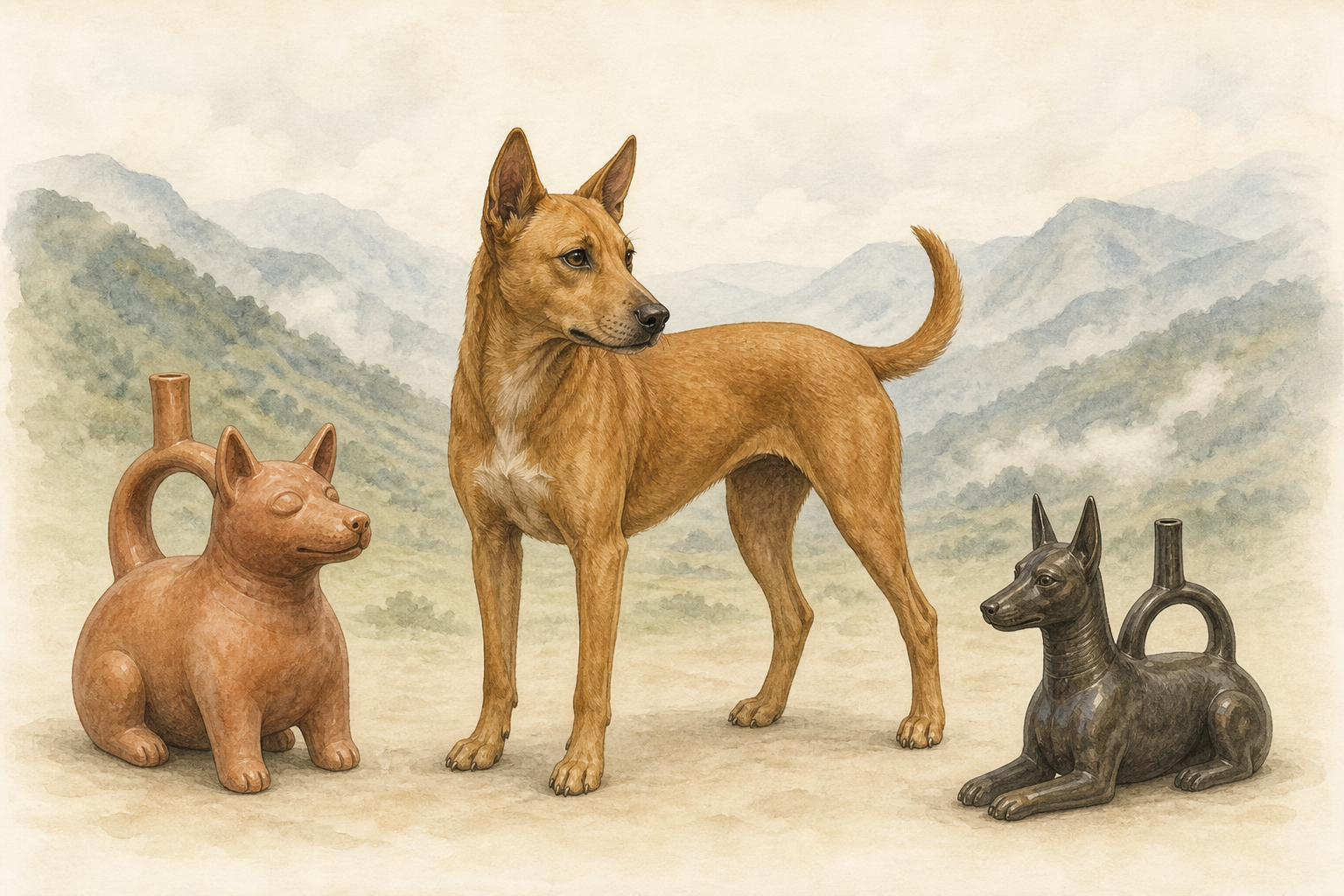
Sixteenth-century chronicles mention guinea pigs, beans and dogs described as ‘mute’. Comparative archaeology and fish inventories help frame questions about human–animal relationships, capture and diet without turning possibilities into local evidence.
Food involved more than a list of separate products. It required observing seasons, keeping seeds, intervening in plant reproduction, preparing soils, making tools, raising or catching animals, and sustaining exchange networks. The archaeological record preserves only fragments of this sequence; individual clues must not be treated as complete certainty.