A settled population needs a predictable supply of energy and nutrients throughout the year. Beans provide plant protein, but fishing, trapping and raising small animals may have supplemented a changing diet. The archaeological question is how to demonstrate this for each place and period.
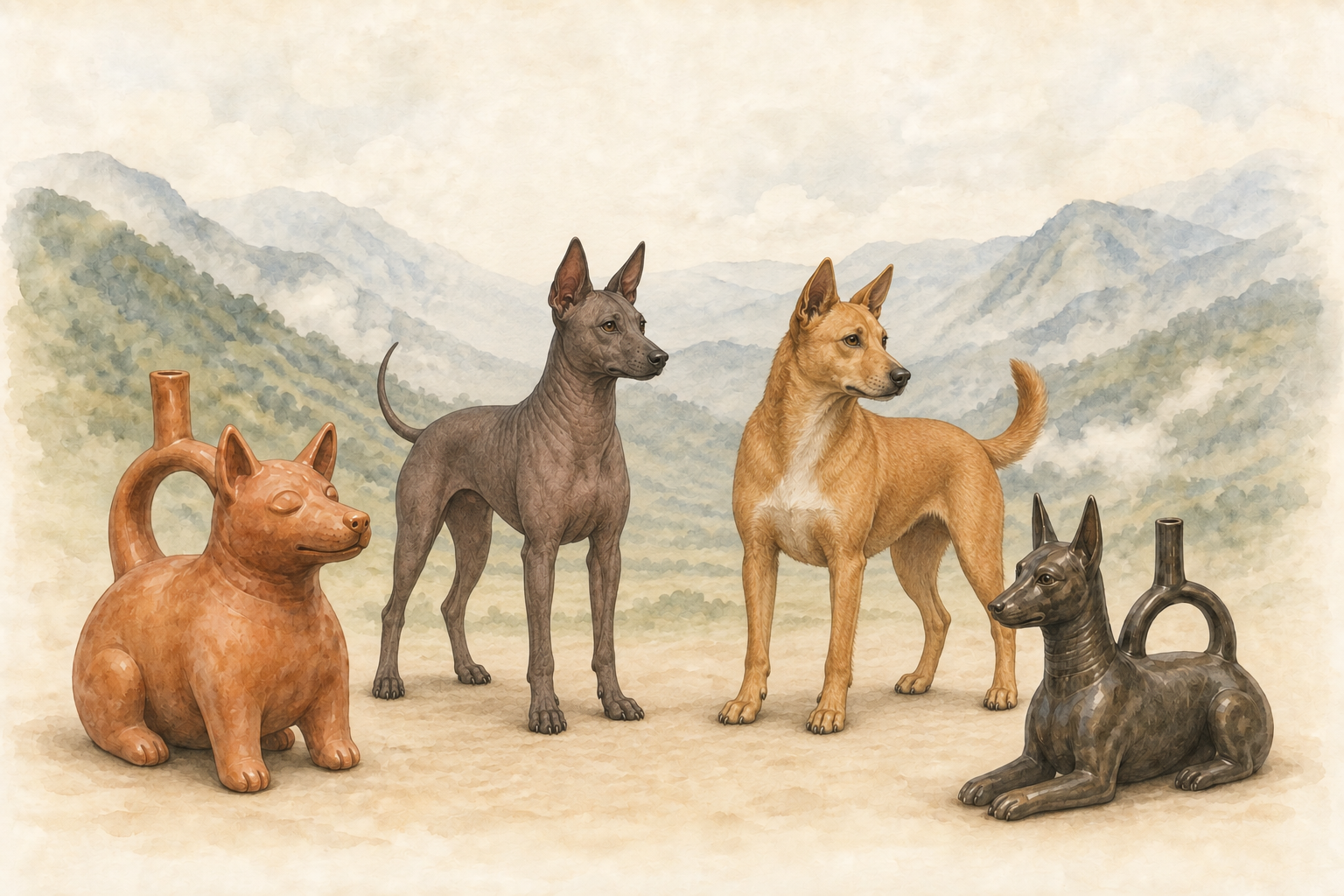
Two dogs, two possible coat types: an illustration of the food-resource hypothesis. Pottery figures are retained as comparisons from the Americas. Proyecto AD, 2026, with OpenAI AI assistance. View interpretation and credits.
Permanent settlement in the Aburrá Valley required crops, stored supplies and access to different environments to work together. Maize and beans provided plant protein; guinea pigs and, in Proyecto AD’s interpretation, some of the dogs mentioned by Sardella broadened the range of foods available. The 1541 chronicle describes abundant provisions, but does not allow each food’s contribution to the diet to be calculated.20, 166
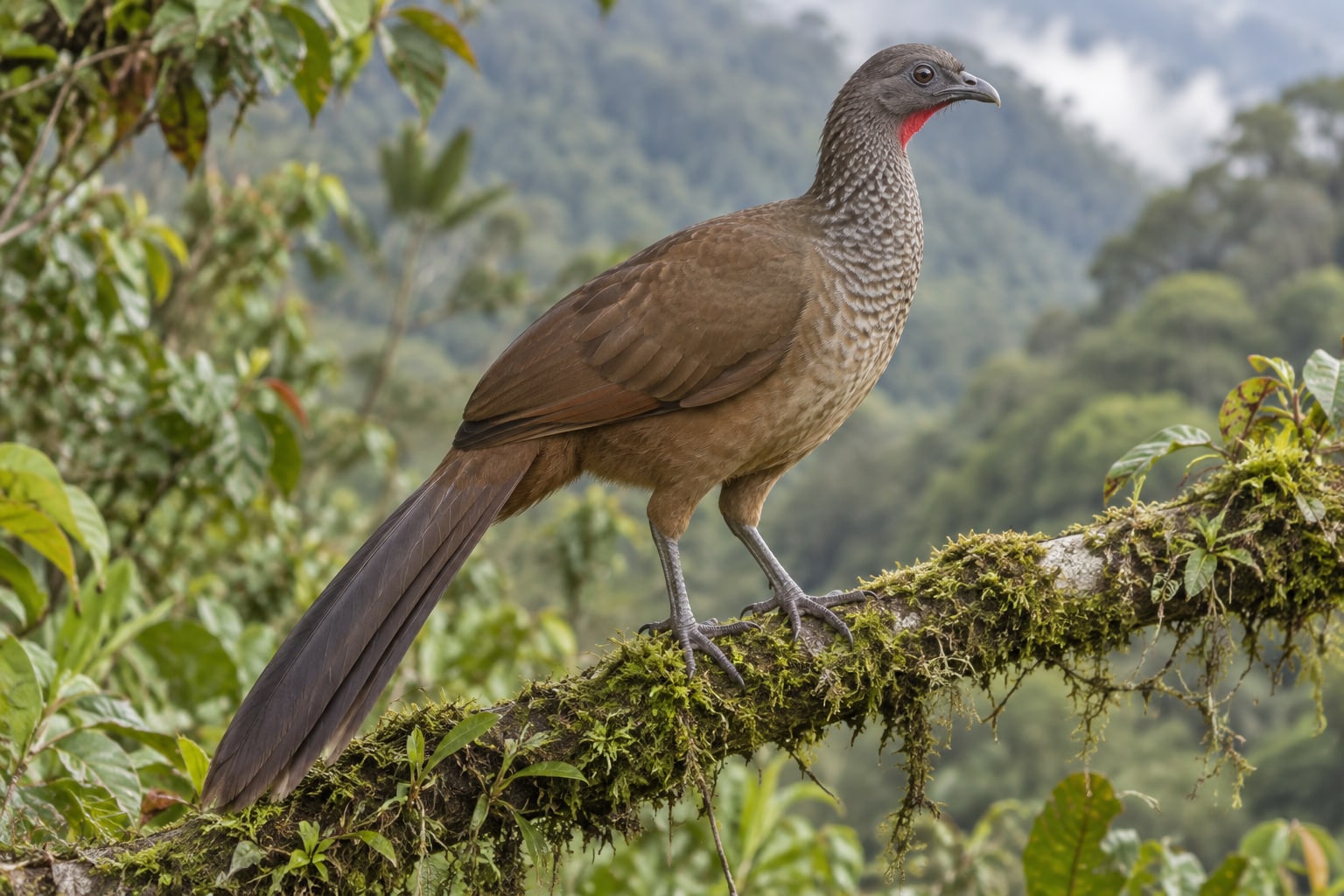
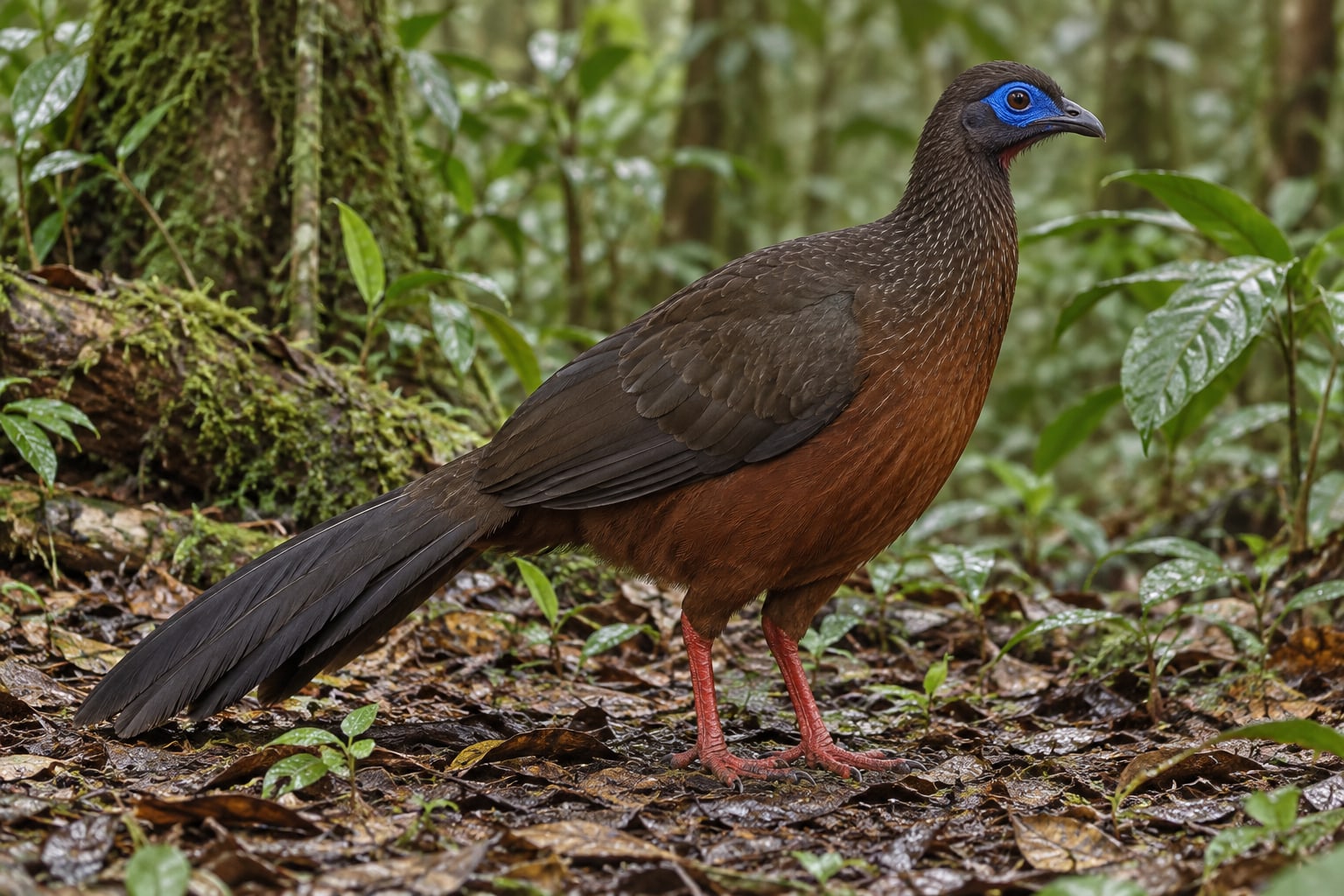
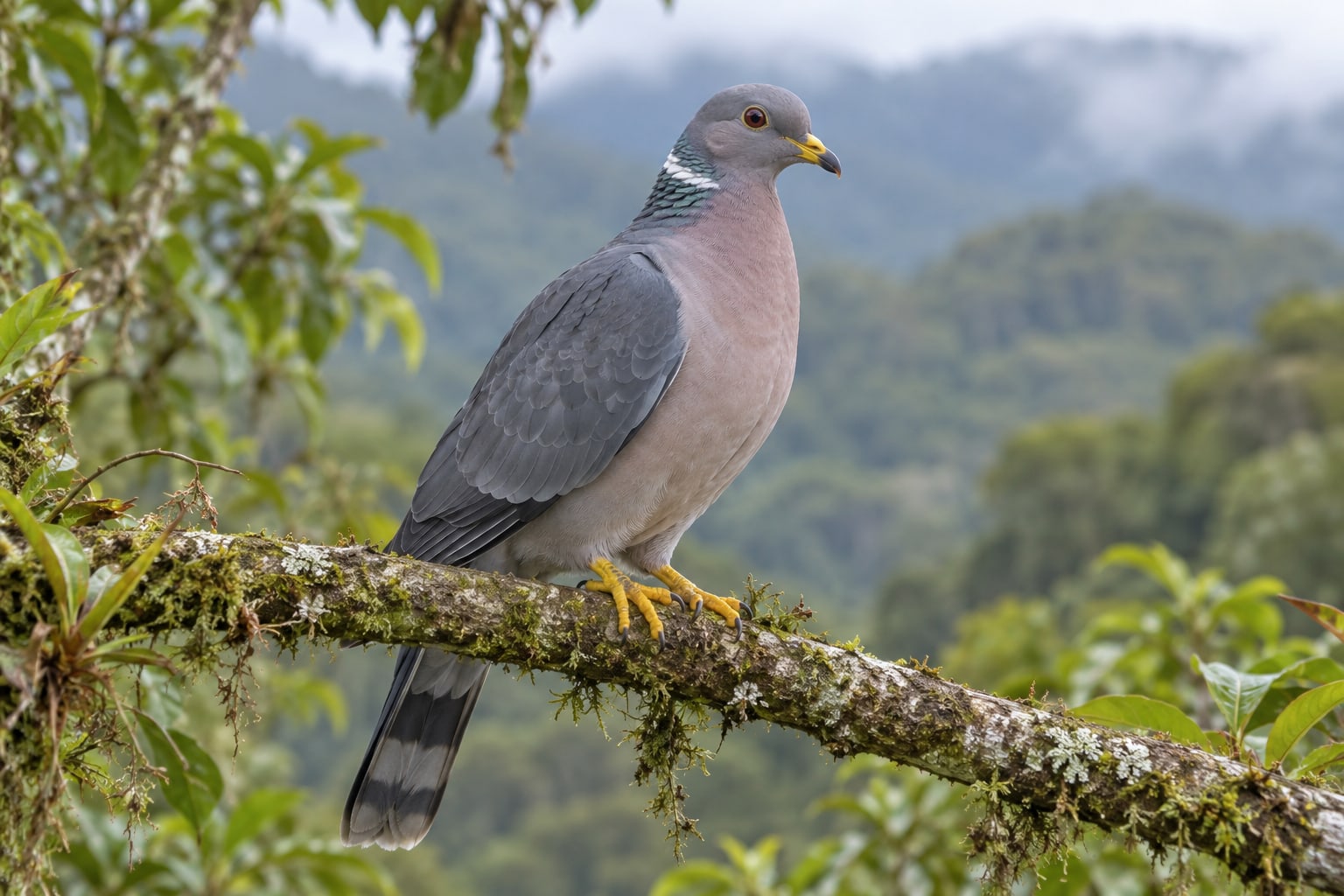
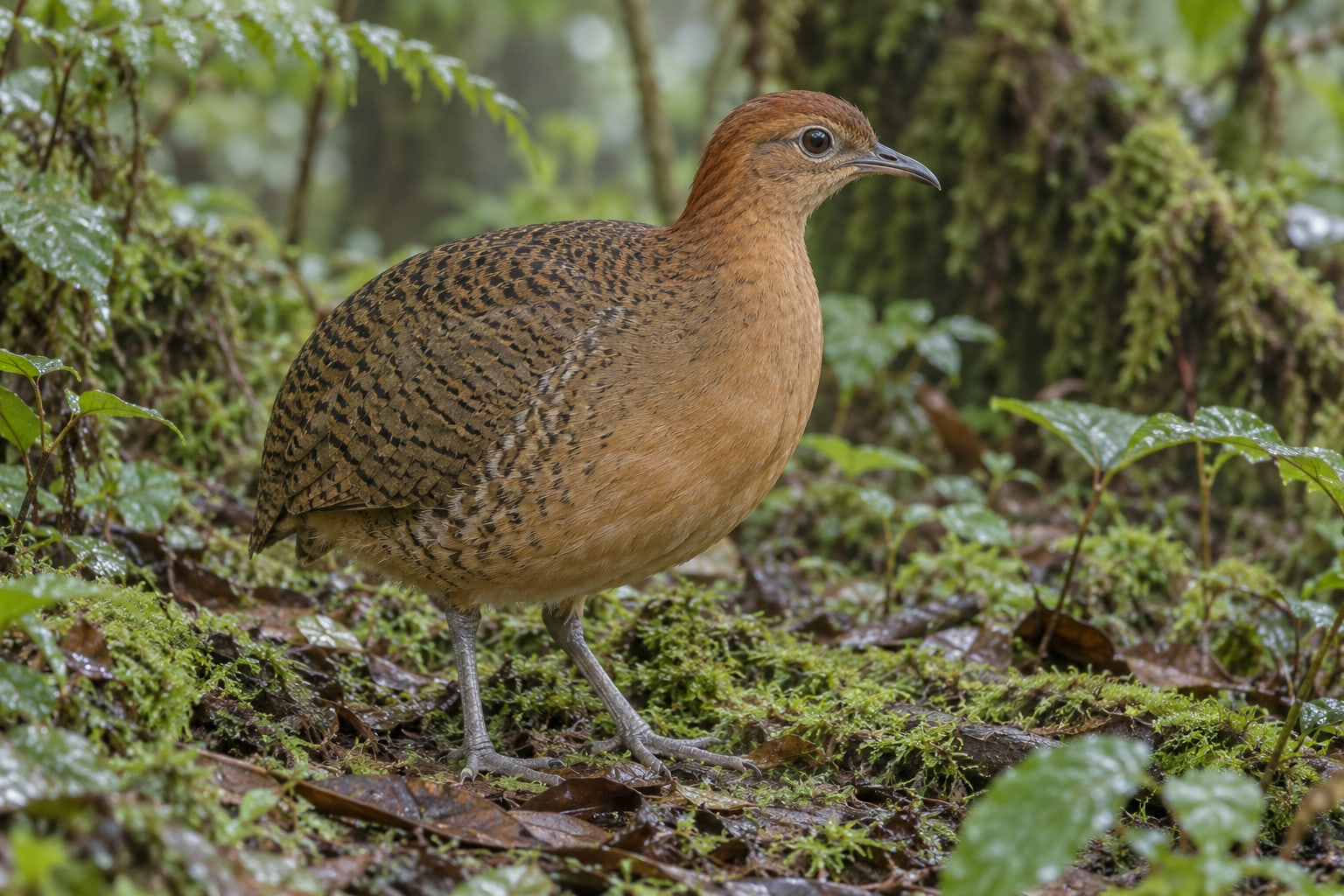
Modern records identify other animals living in, or documented within, the territory: chachalacas, guans, tinamous, armadillos, agoutis and two different paca species, as well as fish from rivers and streams. Camera-trap surveys by the Área Metropolitana and Instituto Humboldt, studies in Envigado and aquatic inventories provide a verifiable basis for investigating these possibilities. Presence during those surveys does not, by itself, demonstrate pre-Hispanic capture or consumption.167, 168, 169
Fishing connects this diversity with more recent memories. A family account of sabaleta brought home around 1988 from the stretch now occupied by Parque de las Aguas places a household practice on the Aburrá River. Scientific sources on the Porce provide biological context, whose regional scope must be specified in each case.170 Understanding how much these resources contributed to ancient populations requires dated animal remains, abundance and seasonality data, and dietary analysis. Read the account and its references.
A historical hypothesis · Aburrá, 1541
The ‘mute’ dogs: a possible food reserve
Proyecto AD’s interpretation is that at least some of the dogs described by Sardella were intended for consumption. The main argument comes from the account itself: they appear alongside maize, beans and guinea pigs in a list of abundant food resources.
Dogs of the Americas: an illustrated comparison. A hairless dog, inspired by present-day examples from Mexico and Peru, and a coated dog. Sardella does not describe the coats of the Aburrá dogs. The pottery figures are retained as freely interpreted recreations; their documented comparative references are the seated Colima dog at The Metropolitan Museum of Art171 and the Chimú dog bottle at the Museo Larco172, 173. They are neither exact replicas of those objects nor finds from Aburrá. Illustration: Proyecto AD, 2026, edited with OpenAI AI assistance. References for living animals: hairless dogs at the Lambayeque museums174, 175. No museum photographs are reproduced.
The argument rests on the sequence of the account
After describing the fighting and Indigenous weapons, Sardella explains why Robledo moved his camp to the settlement: to attend to the wounded and obtain food. He then lists the provisions found in the houses, ending with the dogs. This continuity of subject favours reading them as food resources, beyond their mere presence in a domestic setting.20
‘When the messengers sent by Gerónimo Tejelo reached the Captain and told him what had happened, he immediately set out for that place with the entire camp, for the sake of the wounded and because there was enough maize food there for more than two months. He lodged there, where in the houses, apart from what was in the fields, an immense abundance of food was found: maize and beans, which are almost like peas, and many guinea pigs, which are like rabbits except smaller and very good to eat, and many medium-sized dogs like those of Castile, except that they are mute.’
Read the Spanish text used for this translation
«Como los mensajeros que Gerónimo Tejelo envió llegaron donde el Capitán estaba y le dieron mandado de lo que había sucedido, se partió luego con todo el real para allá, por amor de los heridos y porque allí había comida de maíz para más de dos meses, y se aposentó en él, donde en los bohíos, sin lo que en el campo estaba, se halló mucha infinidad de comida, así de maíz como de frisoles, que casi son como alverjas, y muchos curíes, que son como conejos, salvo que son más chiquitos, que tienen muy lindo comer, y muchos perros medianos como los de Castilla, salvo que son mudos.»
Sardella, account of Aburrá (1541), 2025 edition, pp. 42–43. English translation of the Spanish passage reproduced here. Read the full passage on the homepage →
The phrase ‘very good to eat’ refers directly to the guinea pigs; it is not an explicit statement that dogs were eaten. Nevertheless, this does not remove the significance of their inclusion in the same list. The food-resource hypothesis has a textual basis, although the chronicle does not describe the slaughter, preparation or consumption of these dogs. If that use is confirmed, the presence of many animals would be consistent with raising them as a meat reserve; deliberate fattening is a further possibility, not a practice described by Sardella.
Could reduced barking have been selected through breeding?
The hypothesis proposes that a tendency to bark little may have been desirable when keeping dogs in domestic spaces and raising animals for food. Barking is useful for giving warning and in some forms of hunting, but it is not essential to every hunting activity: Oviedo describes Indigenous dogs used for hunting that he also characterises as mute.176 Silence therefore does not establish an exclusive function or demonstrate deliberate selection. ‘Mute’ records a European judgement; it does not settle whether those dogs were unable to bark or simply vocalised little.
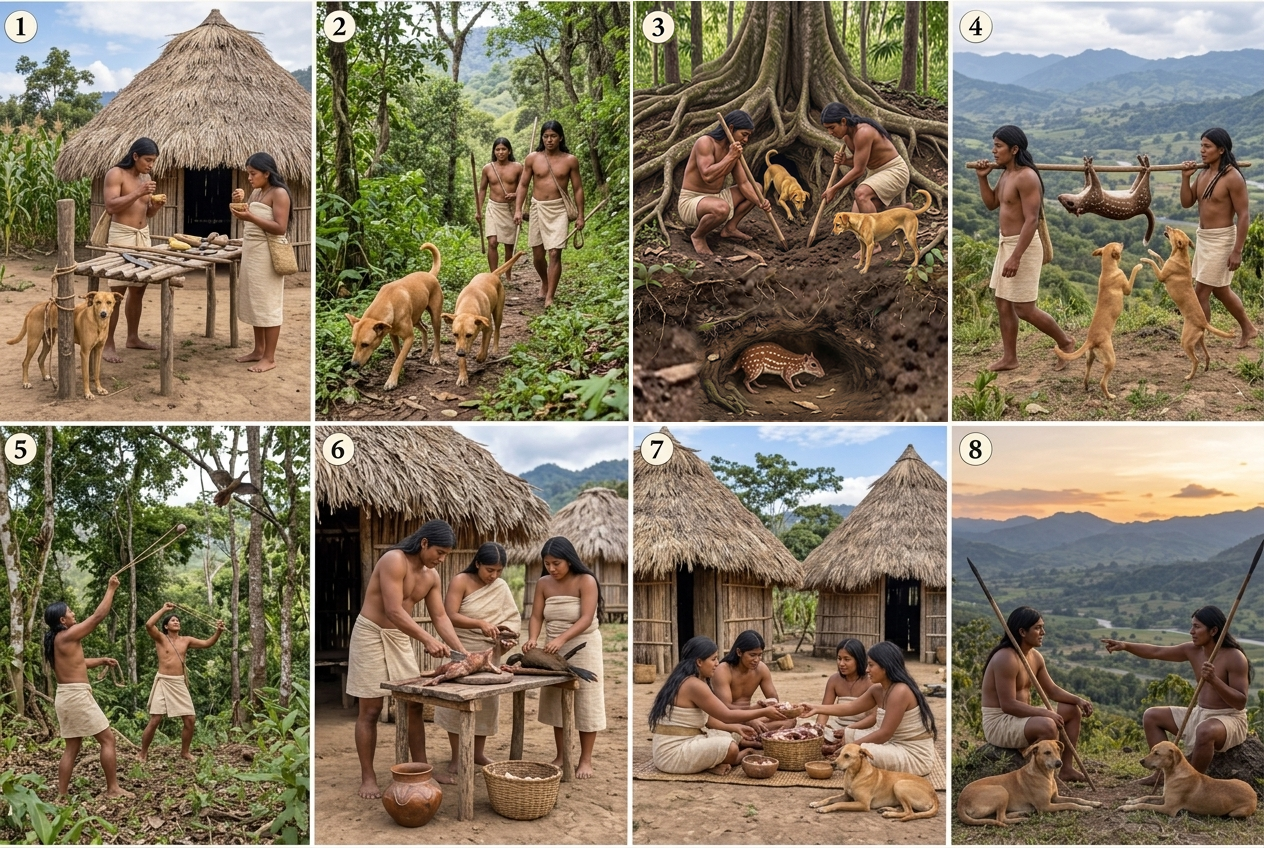
Next hypothesis: mute dogs accompanied the pre-Hispanic people of the Aburrá Valley in tasks such as hunting.
Hypothetical reconstruction of the operational chain of pre-Hispanic hunting with mute dogs (Canis lupus familiaris) in the Aburrá Valley: 1. Preparation next to the bohío; 2. Scent tracking behind the dogs; 3. Locating the lowland paca (Cuniculus paca) in its burrow and capturing it by digging; 4. Transporting the hunted animal; 5. Complementary hunting of Colombian chachalacas (Ortalis columbiana) with slings, without dogs; 6. Butchering the game with lithic flakes; 7. Reciprocal distribution of the catch between families; 8. Planning a new hunt.Audiovisual animation of the operational chain of hunting with mute dogs in the pre-Hispanic Aburrá Valley, integrating ethnohistorical sources from the 16th and 17th centuries with the archaeological context of the region.
When European expeditions traveled through the Antilles, Mesoamerica, Central America, Tierra Firme, and the Andes between the late 15th and 17th centuries, chroniclers repeatedly recorded with amazement the presence of Indigenous domestic canids (Canis lupus familiaris) that they called “mute dogs” (perros mudos) or gozques because they did not bark like European dogs, emitting instead only low whimpers, snorts, or muffled growls [20][176][241].
In the Aburrá Valley, Juan Bautista Sardella's account (1541) of the entry of Jorge Robledo's expedition explicitly documents the presence of “many medium-sized dogs like those of Castile, except that they are mute” inside the Indigenous bohíos, listed alongside maize, beans, and guinea pigs [20]. Sixteenth-century chronicles from other regions of the Americas—especially those by Gonzalo Fernández de Oviedo [176], Friar Bartolomé de las Casas [241], Friar Diego de Landa [242], Friar Bernardino de Sahagún [243], Inca Garcilaso de la Vega [244], and Father Bernabé Cobo [245]—demonstrate that native dogs fulfilled simultaneous and complementary functions in pre-Hispanic societies: hunting auxiliaries through scent tracking, domestic companions, and food or ceremonial reserves [174][175].
“All these dogs, here on this and the other islands, were mute, and even if beaten or killed, they did not know how to bark; some yelp or whimper softly when harmed.”
View original quote in Spanish
«Eran todos estos perros, aquí en esta e las otras islas, mudos, e aunque los apaleasen ni los matasen, no sabían ladrar; algunos gañen o gimen baxo cuando les hacen mal.»
— Gonzalo Fernández de Oviedo, Historia general y natural de las Indias, Book XII, chap. V [176].
“They had some little dogs like those we call lapdogs, mute, which did not bark but growled, and these served only to be eaten, and with them they also hunted hutias...”
View original quote in Spanish
«Tenían unos perrillos chequitos como los que decimos de falda, mudos, que no ladraban sino gruñían, y éstos no servían sino para los comer, y también con ellos cazaban las hutías...»
— Friar Bartolomé de las Casas, Historia de las Indias, Book I [241].
“...where in the bohíos, besides what was in the fields, an immense amount of food was found, both maize and beans, which are almost like peas, and many guinea pigs, which are like rabbits, except that they are smaller and very good to eat, and many medium-sized dogs like those of Castile, except that they are mute.”
View original quote in Spanish
«...donde en los bohíos, sin lo que en el campo estaba, se halló mucha infinidad de comida, así de maíz como de frisoles, que casi son como alverjas, y muchos curíes, que son como conejos, salvo que son más chiquitos, que tienen muy lindo comer, y muchos perros medianos como los de Castilla, salvo que son mudos.»
— Juan Bautista Sardella, Relación del descubrimiento de las provincias de Antiochia, 1541 [20].
With or without hair: two possibilities, one comparison
Present-day hairless dogs from Mexico and Peru provide a visual reference for imagining one possibility. The hypothesis suggests that hairlessness may have made culinary preparation easier and could therefore have been favoured in breeding. Such a preference has not yet been documented for Aburrá. Consumption did not require hairless animals either: Oviedo records American dogs with different coats and, when describing their preparation as food in Nicaragua, mentions removing the hair.176 The Peruvian museum also notes that the hairless dog was only one of the pre-Hispanic canine forms.177
The image brings both possibilities together without identifying a local breed. The genetic history of dogs in the Americas reveals profound changes after colonisation, so present-day populations are not a direct portrait of those described in 1541.178 Use as food could coexist with companionship, hunting or ceremonial roles; Andean contexts also show diverse relationships between dogs and people.179
Food abundance and conditions for well-being
The expressions ‘enough maize food for more than two months’ and ‘an immense abundance of food’, together with the beans, guinea pigs and resources in the fields, constitute indications of food availability and storage capacity. They support the case for a material basis conducive to food-related well-being at the moment described: a community able to produce, gather and store provisions. Raising dogs for consumption is a coherent hypothesis within that economy.
The abundance encountered by an invading expedition does not, by itself, reveal how food was distributed among households, how long stores lasted in other seasons, or the health of the population as a whole. Food-related well-being is used here as a limited interpretation of availability, not a general diagnosis. The arrival of troops and their appropriation of supplies may have disrupted precisely the conditions glimpsed in the account.
A population able to sustain itself and mobilise people
Read as a whole, the chronicle offers three demographic clues that complement the food-resource hypothesis:20
Mobilisation · p. 42
‘up to a thousand’ and ‘up to three thousand’
The narrator estimates two successive gatherings during the fighting. They suggest a capacity to mobilise people and resist. The figures must not be added together: the same people may have participated, and the numbers do not come from a census.
Settlement · pp. 42–43
Houses and neighbouring settlements
The occupation of a settlement and the arrival of people from neighbouring villages point to a territory inhabited by several communities, with connections between settlements. They do not allow population density per square kilometre to be calculated.
Provisioning · pp. 42–43
Stored supplies and a fifteen-day stay
The provisions and the expedition’s stay are consistent with substantial productive capacity. The twenty foot soldiers and twelve horsemen belonged to Tejelo’s advance party, not to Robledo’s entire camp.
The defensible conclusion is that the episode describes a settled population, connected to neighbouring communities and equipped with resources to sustain itself and mobilise people. The abundance of dogs fits that household economy and strengthens the case for investigating their use as food. The text does not establish a total population or a growth rate. The number of households, the expedition’s full size, ration quantities and the proportion of inhabitants mobilised are unknown.
The end of the account records pursuit, captivity and episodes of suicide. These indicate a violent rupture in local life, but are insufficient to quantify its demographic impact. Religious explanations or fear of beards attributed to Indigenous people belong to the colonial narrative framework and should not be adopted as sufficient explanations for those deaths.
Guinea pigs: a documented presence
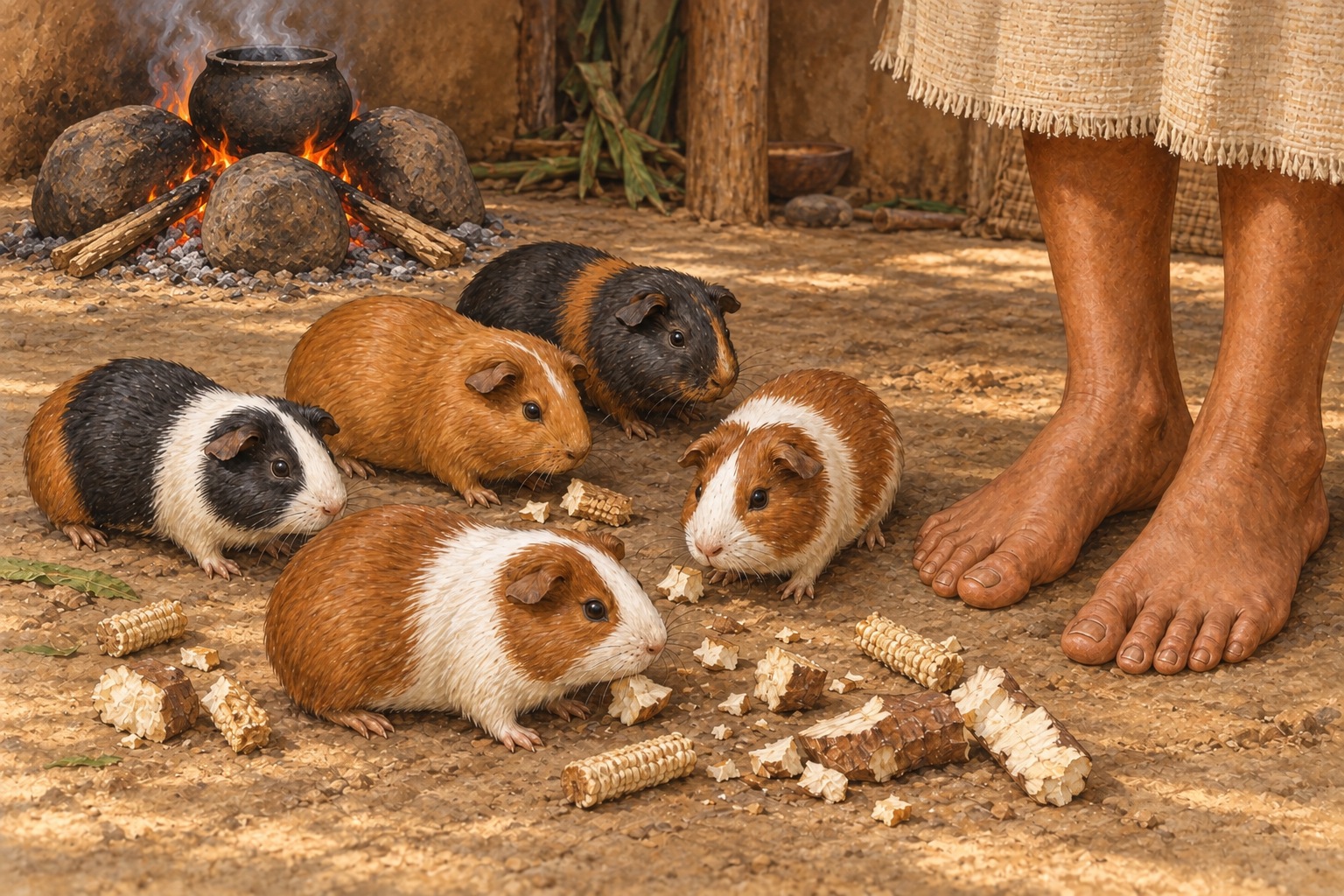
Juan Bautista Sardella’s account of the conquistadors’ entry into the Valley mentions maize, beans and ‘many guinea pigs’.20 This is direct historical evidence for the sixteenth century, but must not automatically be projected across all preceding millennia without archaeological contexts.
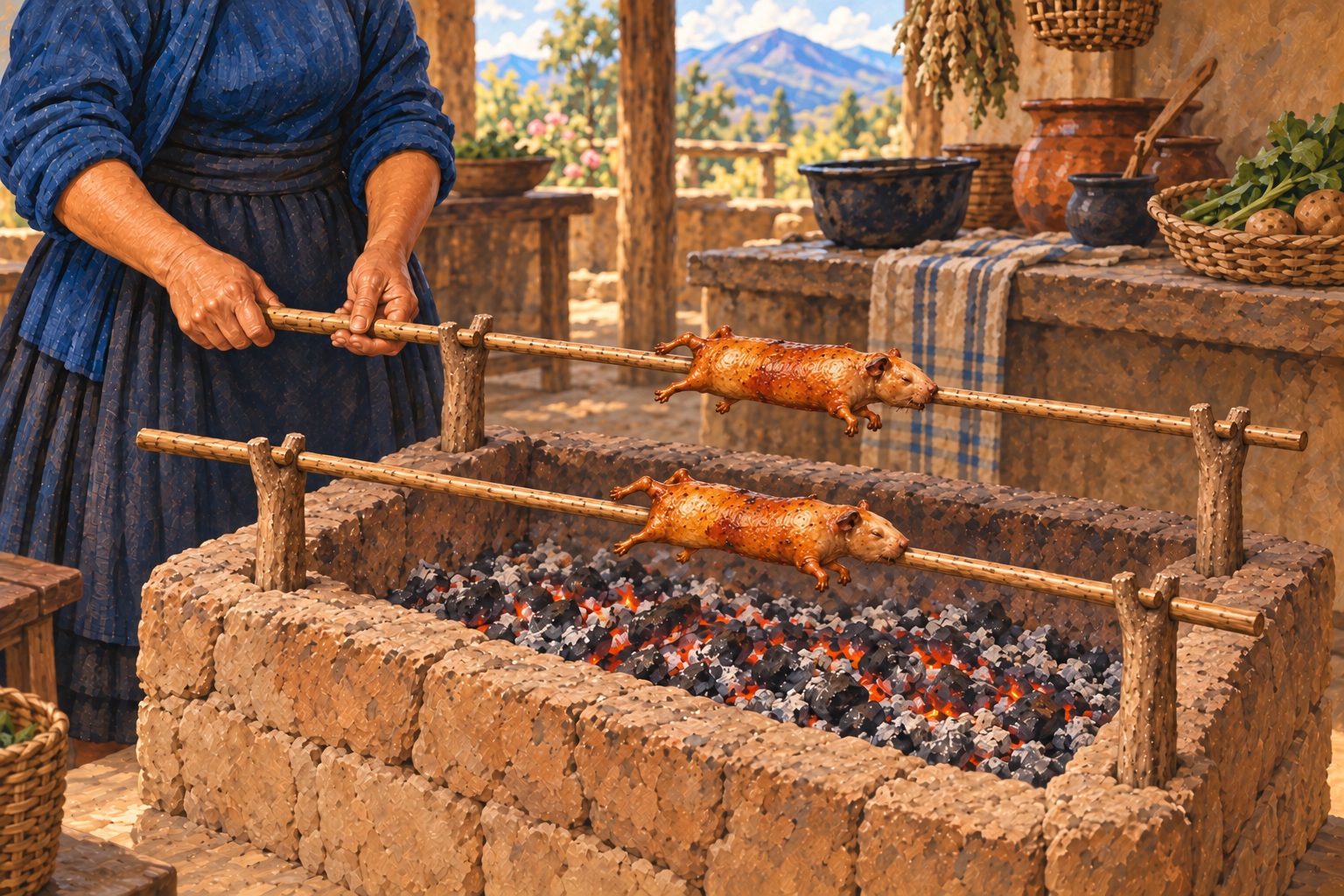
Recreation of a pre-Hispanic domestic scene. Scale and materials are guided by contemporary references; the scene does not reproduce an archaeological find. Proyecto AD, 2026, with AI assistance.180Contemporary comparison from Nariño: guinea pigs on spits above embers. A new composition guided by present-day photographs supplied to the project and Radio Nacional’s report. It does not reconstruct a local pre-Hispanic technique. Proyecto AD, 2026, with AI assistance.180, 181
Forests and hillsides of the Valley
Birds and mammals: presence and use
Modern records identify animals that may have been among the food resources available to communities. This selection brings together documented presence in the Aburrá Valley, accounts of food use and species worth investigating. Each entry distinguishes established information from open questions. Information from other regions is explicitly identified.
How to read the entries. Dates refer to the record or its publication, not to confirmation of presence in 2026. A species’ presence and its consumption elsewhere do not demonstrate pre-Hispanic use in Aburrá. ‘Potentially hunted’ describes a historical possibility of capture, not permission to hunt.
The survey by the Área Metropolitana del Valle de Aburrá, conducted with the Instituto de Investigación de Recursos Biológicos Alexander von Humboldt, documents 3,568 records of 82 species using 65 cameras installed across the ten municipalities between December 2021 and October 2023. Version 1.1 of the dataset was published in 2024. Locations were selected on the basis of earlier wildlife reports; this sampling does not establish the abundance of each species.167
Birds
Proyecto AD + OpenAI, 2026 · AI recreation. Illustrative image, not a photographic record.
Colombian chachalaca
Ortalis columbiana
Recorded by cameras in Envigado’s SILAP during 2022 monitoring, published in 2023.168
Medellín’s biodiversity assessment includes it among birds with potential as a food resource.182
Proyecto AD + OpenAI, 2026 · AI recreation. Illustrative image, not a photographic record.
Sickle-winged guan
Chamaepetes goudotii
Camera-trap record from Envigado’s SILAP: 2022, published in 2023.168
Listed among birds with potential to provide food in the Medellín assessment.182
Proyecto AD + OpenAI, 2026 · AI recreation. Illustrative image, not a photographic record.
Band-tailed pigeon
Patagioenas fasciata
Recorded in the metropolitan camera-trap survey published in 2024.167 The 2014 assessment documents its use as food in Santa Elena.182
Local use is attributed to a personal communication from A. Castaño reported in that document; this is not a recent census.
Proyecto AD + OpenAI, 2026 · AI recreation. Illustrative image, not a photographic record or an identification plate.
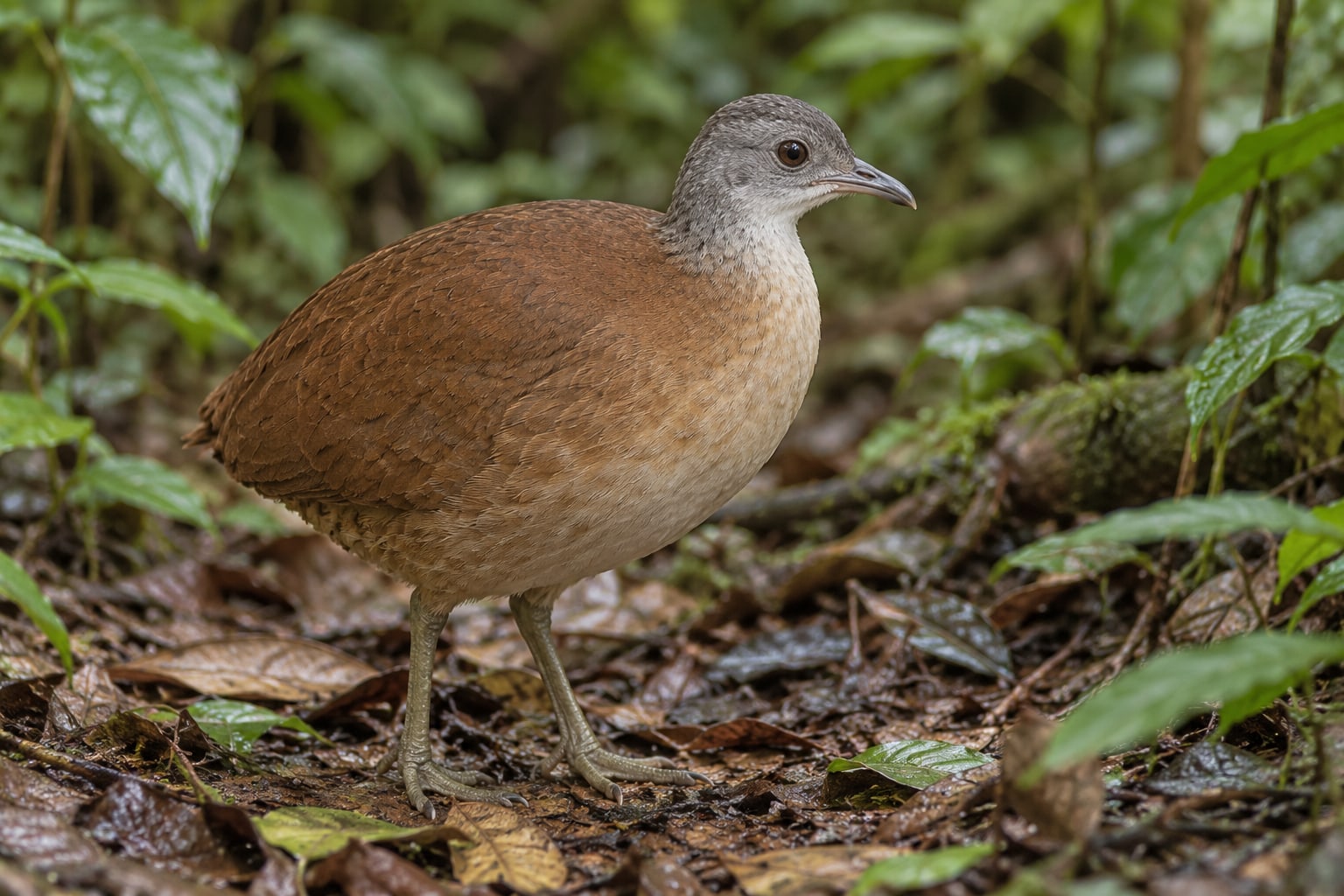
Tawny-breasted tinamou
Nothocercus julius
Envigado camera trapping, 2022; 2023 SILAP guide, table 3.168
Broadens the investigation of ground-dwelling birds. The source establishes presence, not local pre-Hispanic consumption.
Proyecto AD + OpenAI, 2026 · AI recreation. Illustrative image, not a photographic record or an identification plate.
Little tinamou
Crypturellus soui
Regional list reproduced by Muñetón Jácome (ITM, 2023), appendix 1, drawing on the Valley’s photographic guide.183
A regional bibliographic reference without a date for an individual observation; this species belongs to the tinamou family.
Proyecto AD + OpenAI, 2026 · AI recreation. Illustrative image, not a photographic record or an identification plate.
Chestnut wood-quail
Odontophorus hyperythrus
Camera traps in Envigado, 2022; table 3 of the 2023 guide.168
A wood-quail in the family Odontophoridae, distinct from tinamous. Included as a candidate for testing the food-resource hypothesis.
Proyecto AD + OpenAI, 2026 · AI recreation. Illustrative image, not a photographic record or an identification plate.
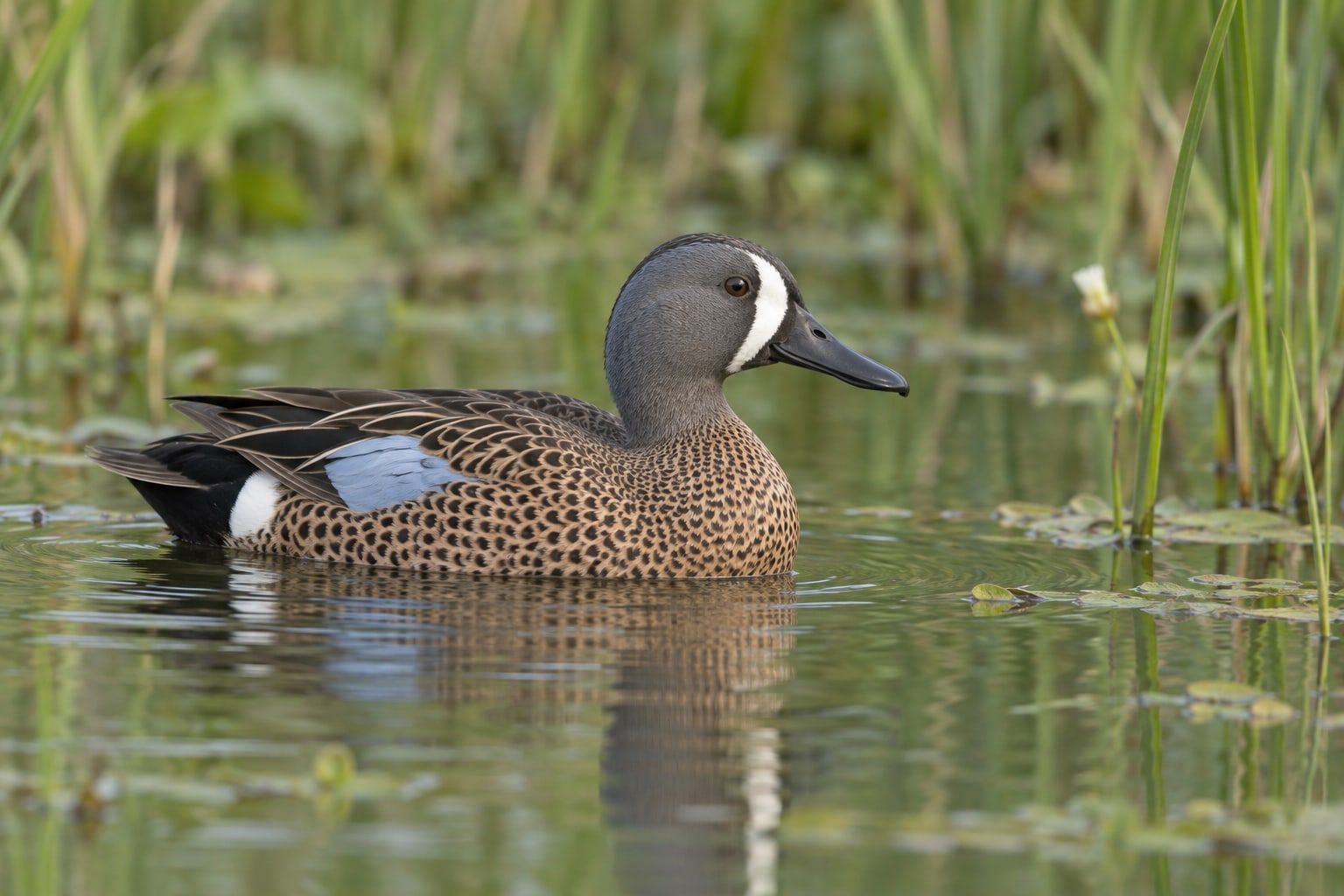
Blue-winged teal
Spatula discors
Listed as Anas discors in the POMCA and in the regional list compiled by ITM in 2023.169, 183
The illustration depicts a male in breeding plumage; modern records do not demonstrate ancient capture.
Mammals
Proyecto AD + OpenAI, 2026 · AI recreation. Illustrative image, not a photographic record.
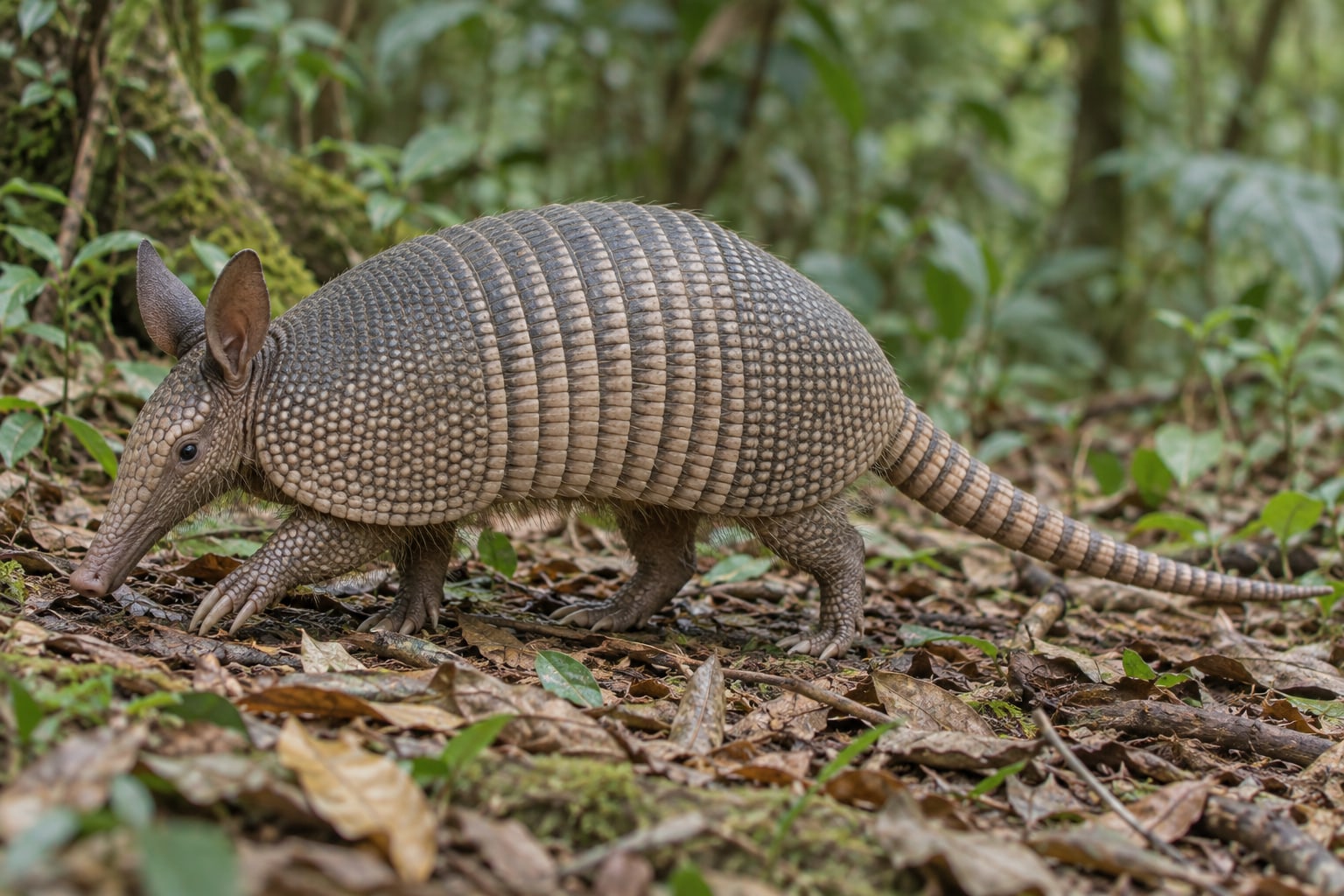
Nine-banded armadillo
Dasypus novemcinctus
Presence documented by cameras in Envigado in 2022; the name follows the 2023 guide.168
The Instituto Humboldt documents its consumption in Colombia; that national reference does not measure hunting in Aburrá.184
Proyecto AD + OpenAI, 2026 · AI recreation. Illustrative image, not a photographic record.
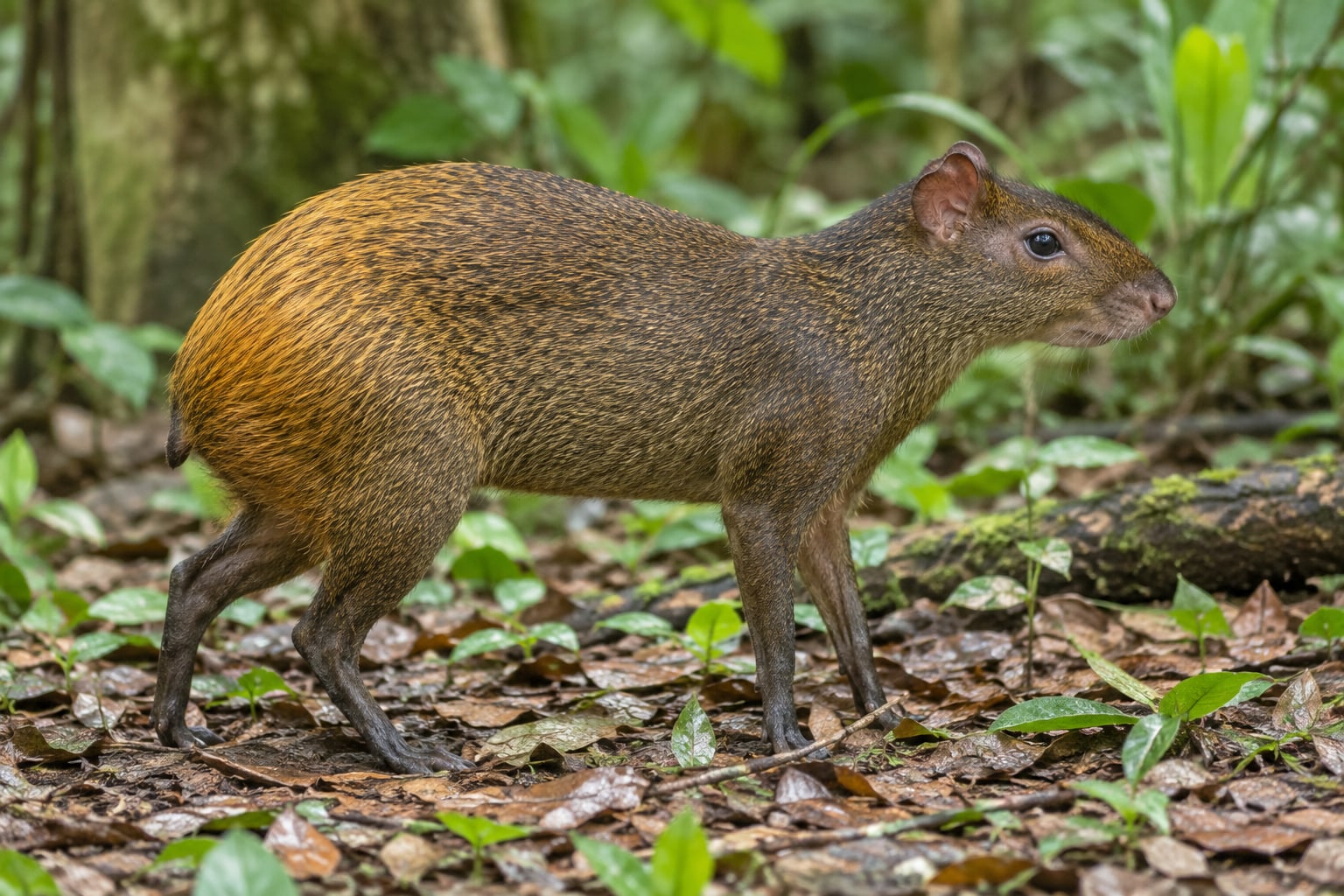
Ñeque or guatín (agouti)
Dasyprocta punctata
Included in Envigado SILAP’s mammal monitoring, 2022–2023.168
The CVC documented trade in its meat in southwestern Colombia in 2017: evidence of use outside the Valley.185
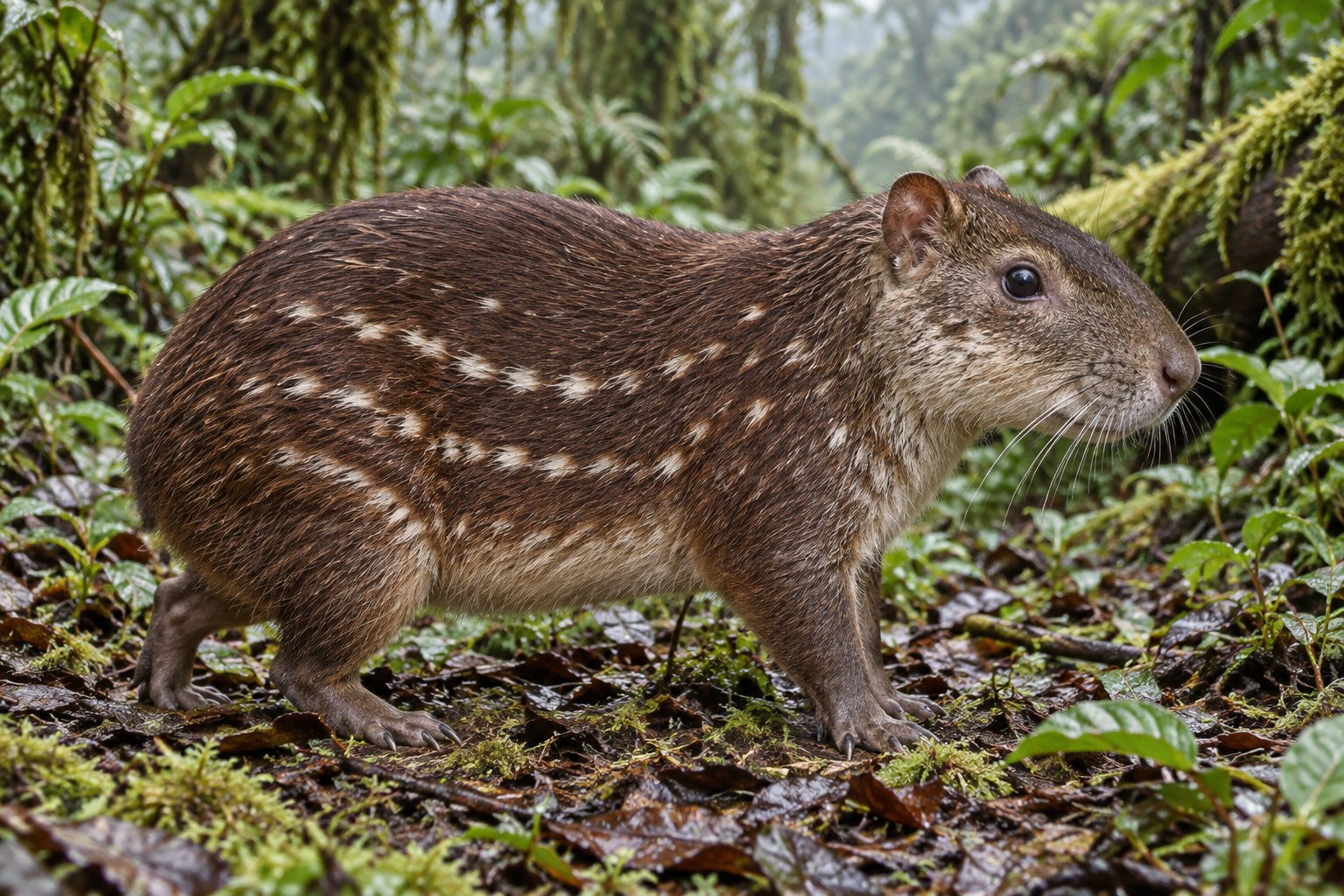
Cuniculus taczanowskii. Proyecto AD + OpenAI, 2026 · AI recreation reviewed against identified sources. Not a photograph or a diagnostic identification plate.
Mountain paca
Cuniculus taczanowskii
Recorded by camera traps in Envigado’s SILAP in 2022.168
Corantioquia identifies hunting for meat among the pressures on this species.186
Dark, long, dense fur; a robust body, tiny tail and pale spots in rows along the flanks. Reference: Parque Nacional Cajas guide, p. 139.187
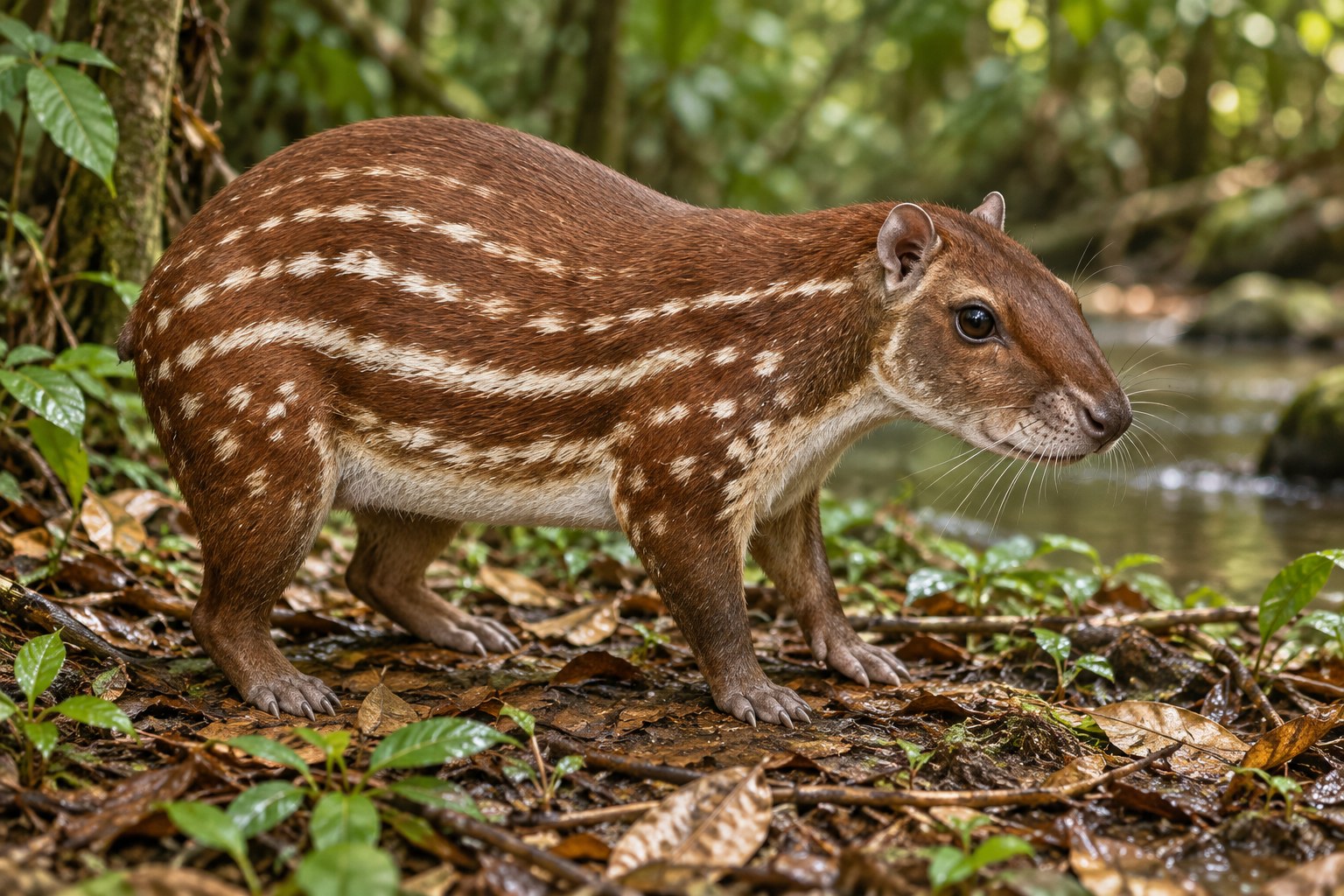
Cuniculus paca. Proyecto AD + OpenAI, 2026 · AI recreation reviewed against identified sources. Not a photograph or a diagnostic identification plate.
Lowland paca or boruga
Cuniculus paca
Included in the metropolitan camera-trap survey published in 2024, with records in the dataset extending to 2023.167
A different species from Cuniculus taczanowskii, the mountain paca illustrated above. Their records must not be merged under a single common name.
Shorter, reddish-brown fur, white spots in rows and raised hindquarters. Reference: CONABIO CITES guide, pp. 363–364.188
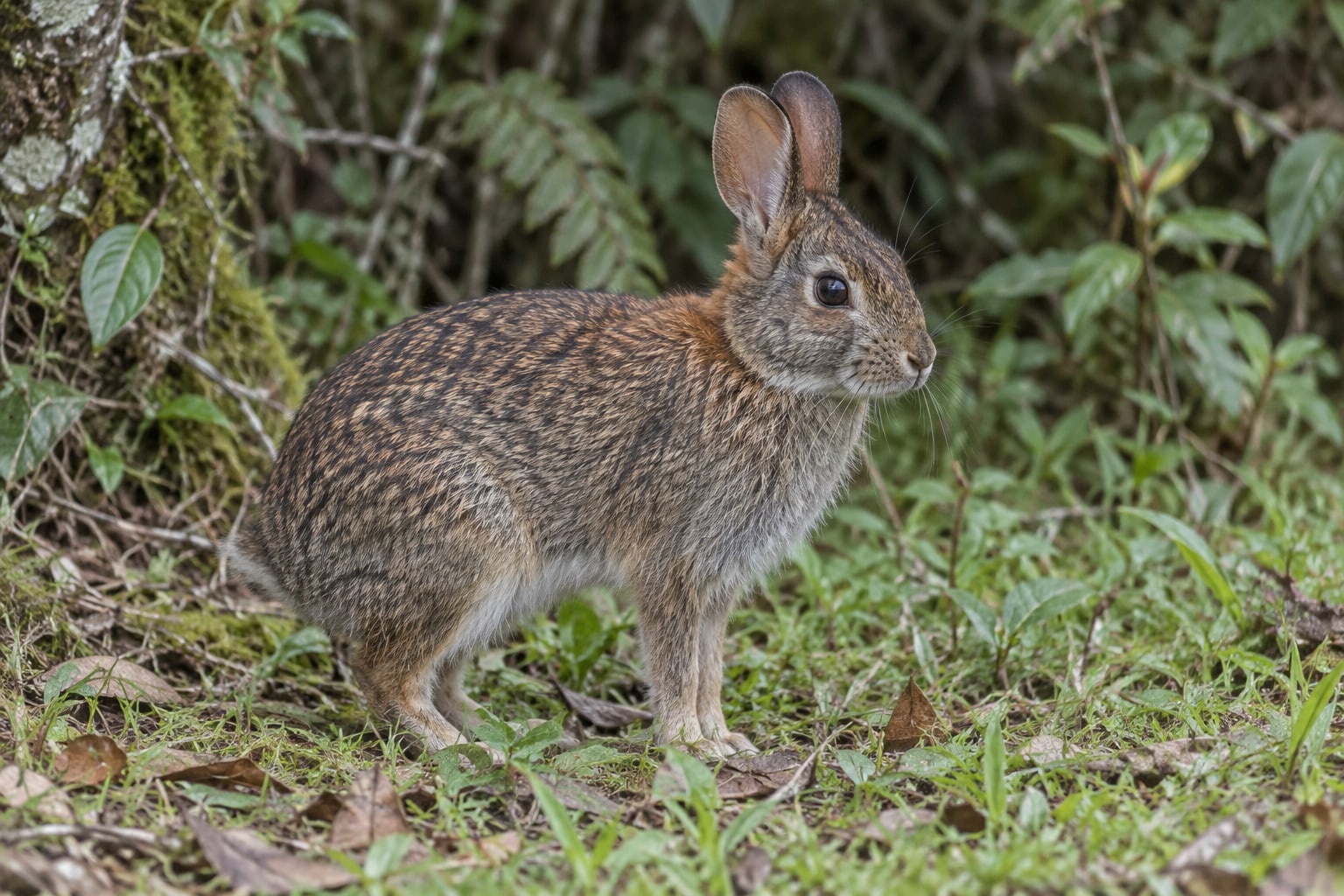
Proyecto AD + OpenAI, 2026 · AI recreation. Illustrative image, not a photographic record or an identification plate.
Conejo sabanero (rabbit)
Sylvilagus nicefori
Recorded in Envigado in 2022 and in the metropolitan camera-trap dataset.167, 168
The name follows the local inventory. Earlier records labelled Sylvilagus brasiliensis are not automatically assigned to this species.
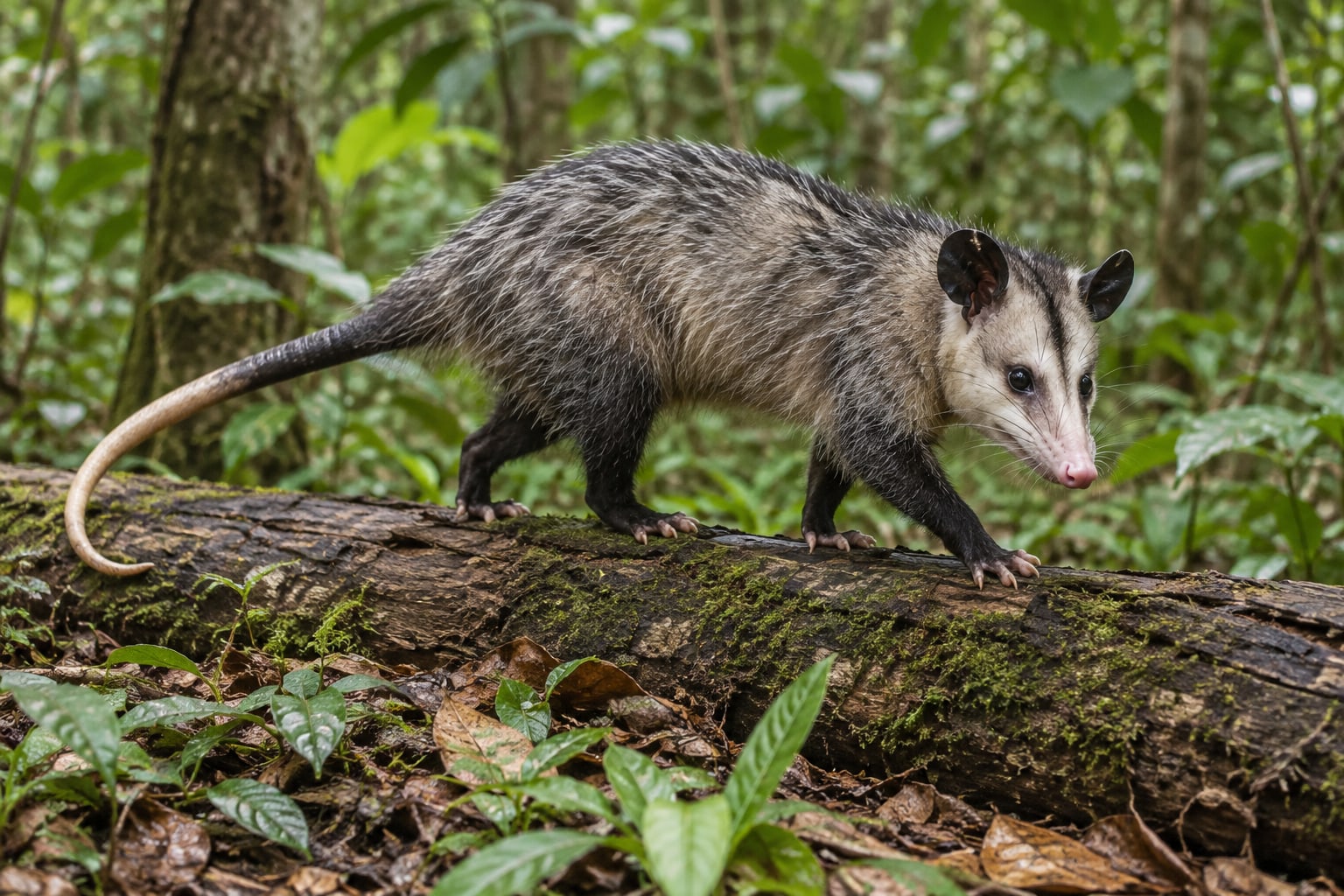
Proyecto AD + OpenAI, 2026 · AI recreation. Illustrative image, not a photographic record or an identification plate.
Common opossum or chucha
Didelphis marsupialis
Recorded in Envigado in 2022 and in the metropolitan dataset published in 2024.167, 168
Local presence is documented; possible consumption in pre-Hispanic Aburrá requires independent evidence.
Proyecto AD + OpenAI, 2026 · AI recreation. Illustrative image, not a photographic record or an identification plate.
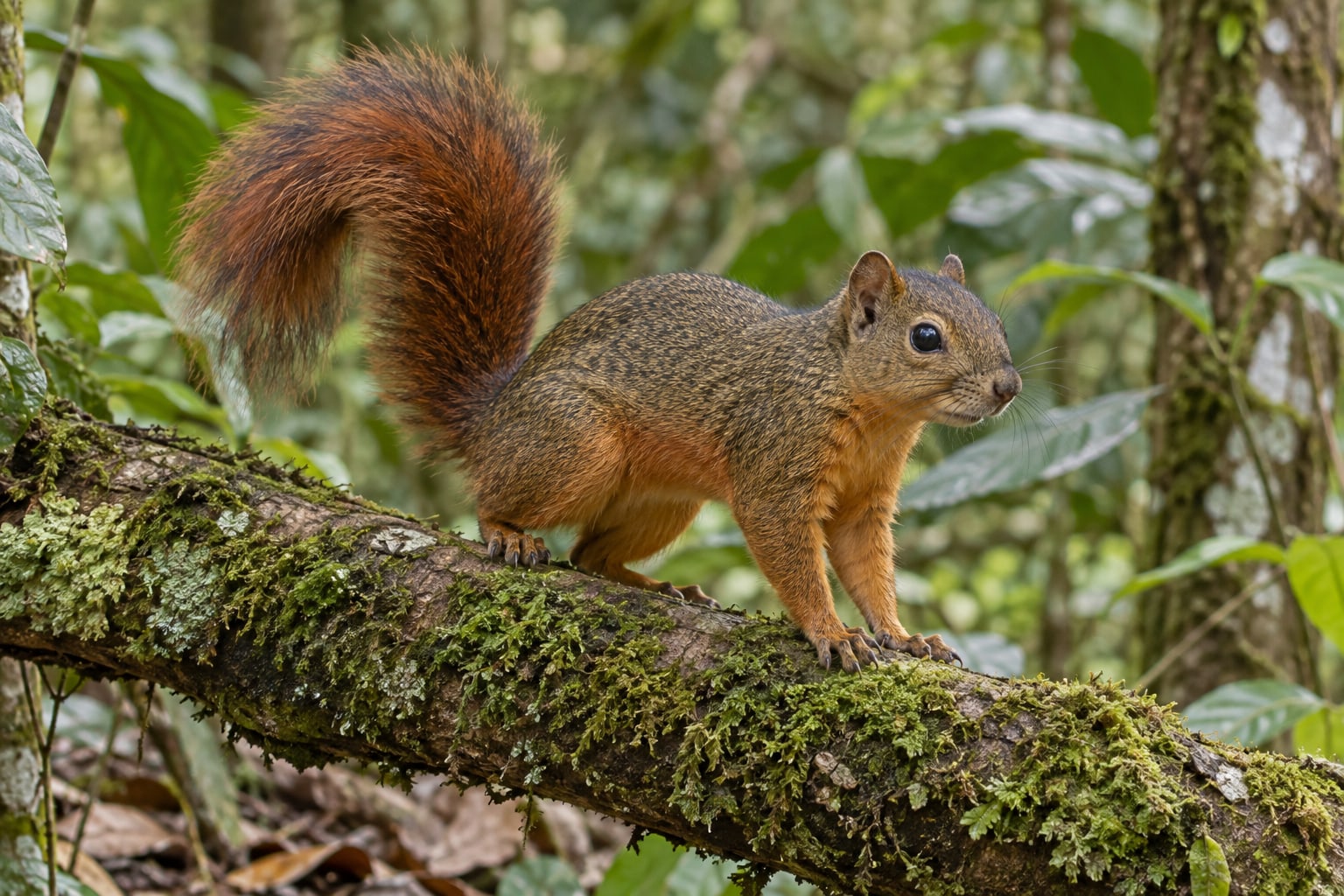
Red-tailed squirrel
Syntheosciurus granatensis
Recorded in the Aburrá Valley camera-trap survey published in 2024.167
The name used in that inventory is retained; other sources list it as Sciurus granatensis. Possible local use as food remains to be tested.
The river and its tributaries
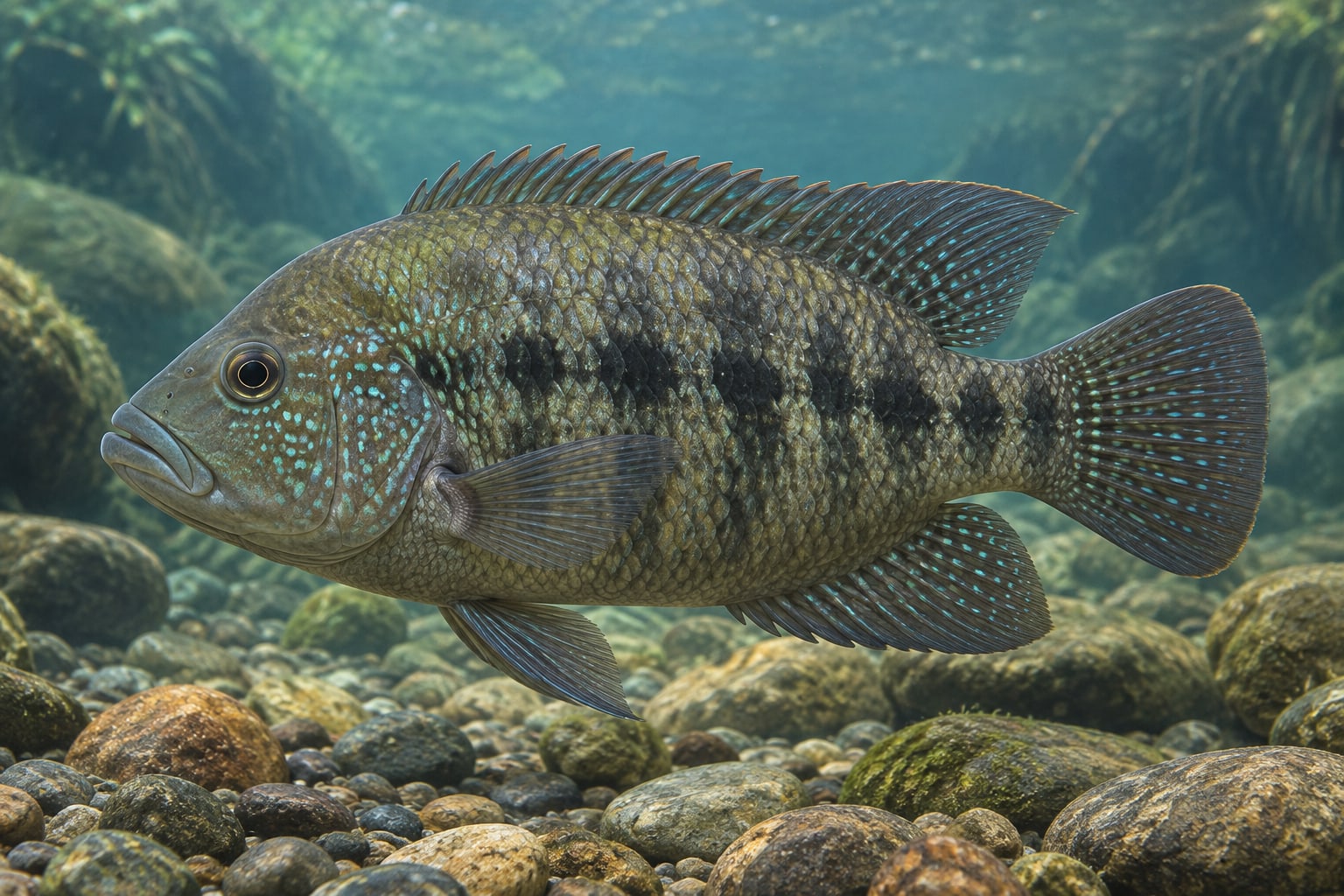
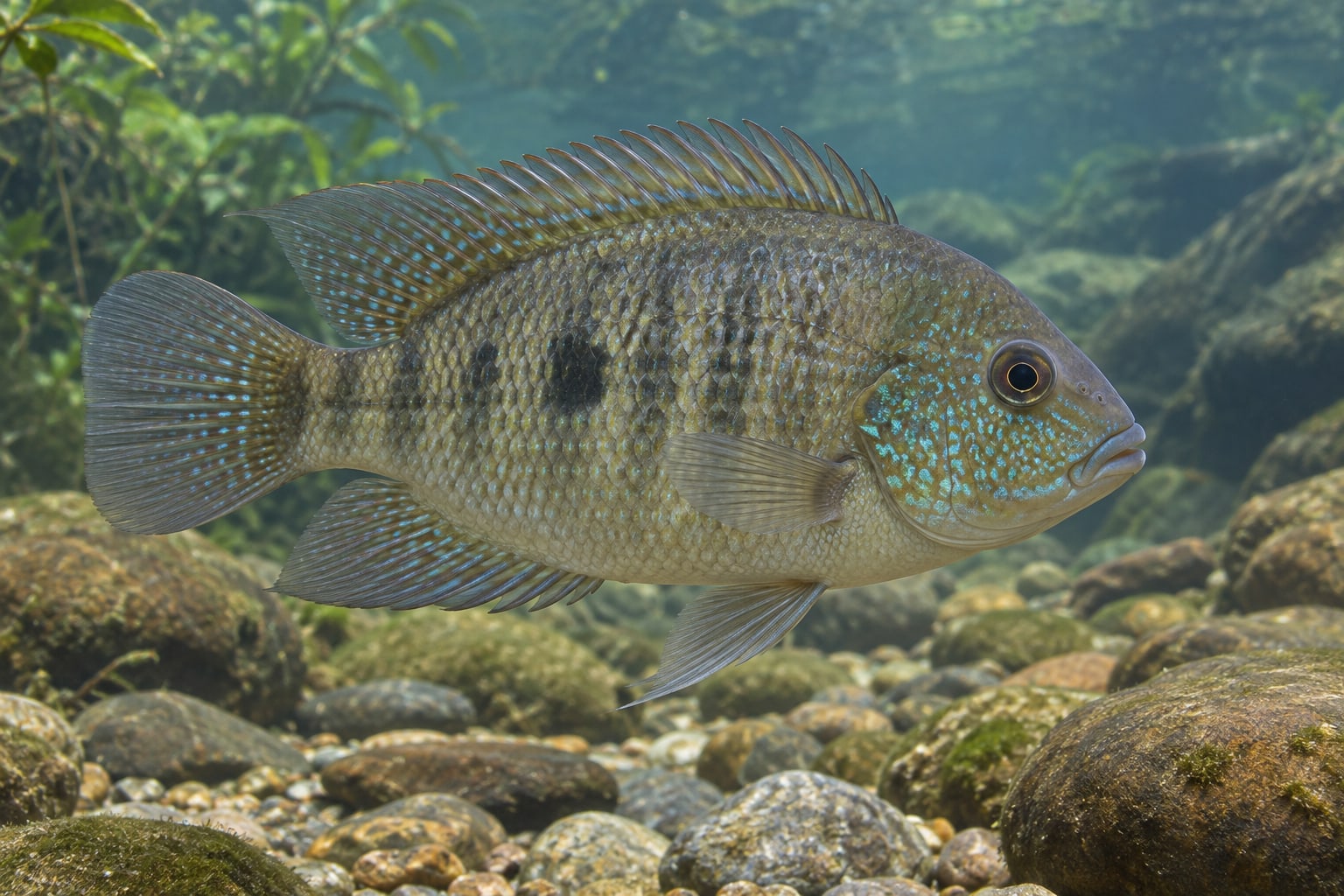
Native fish that could be caught
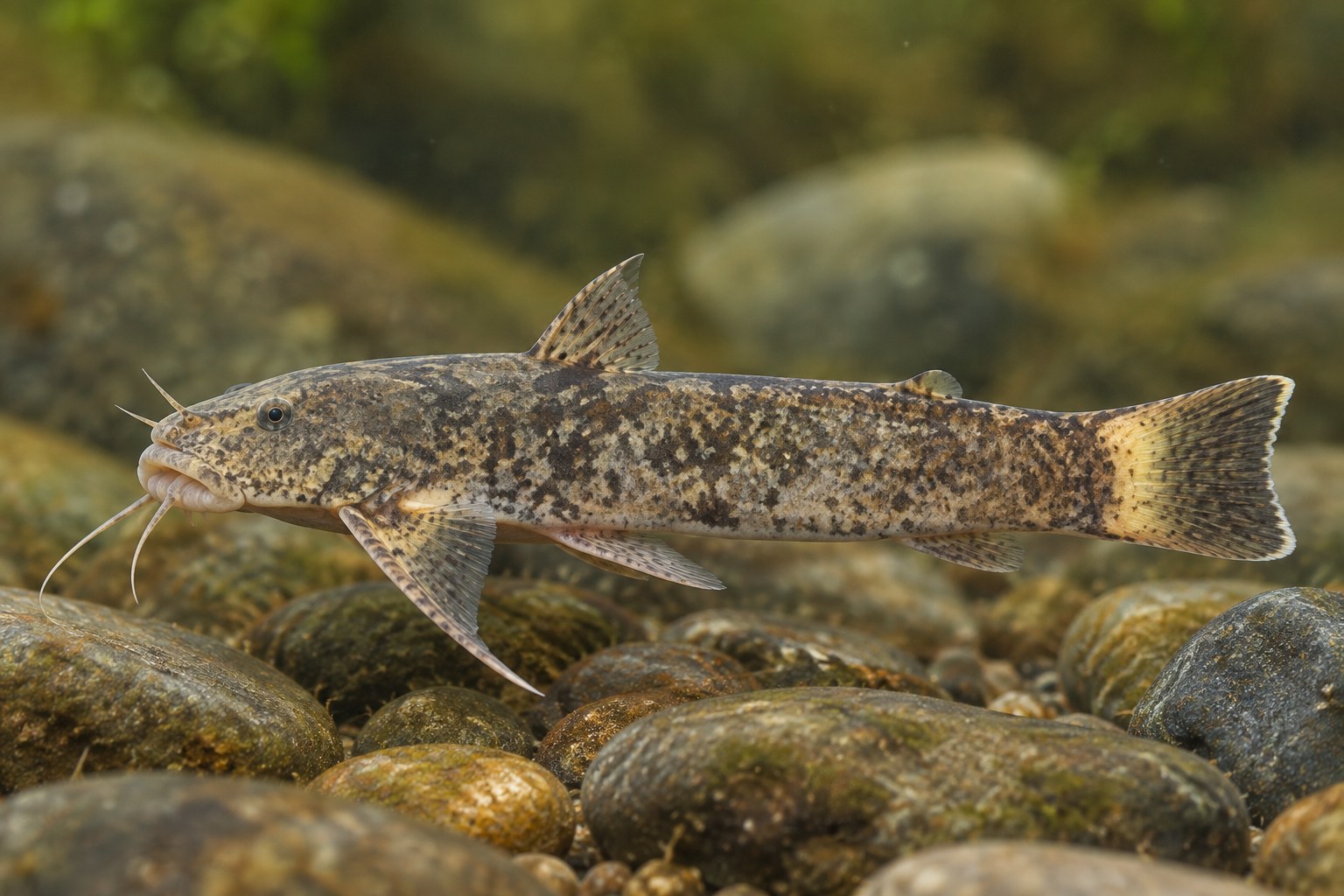
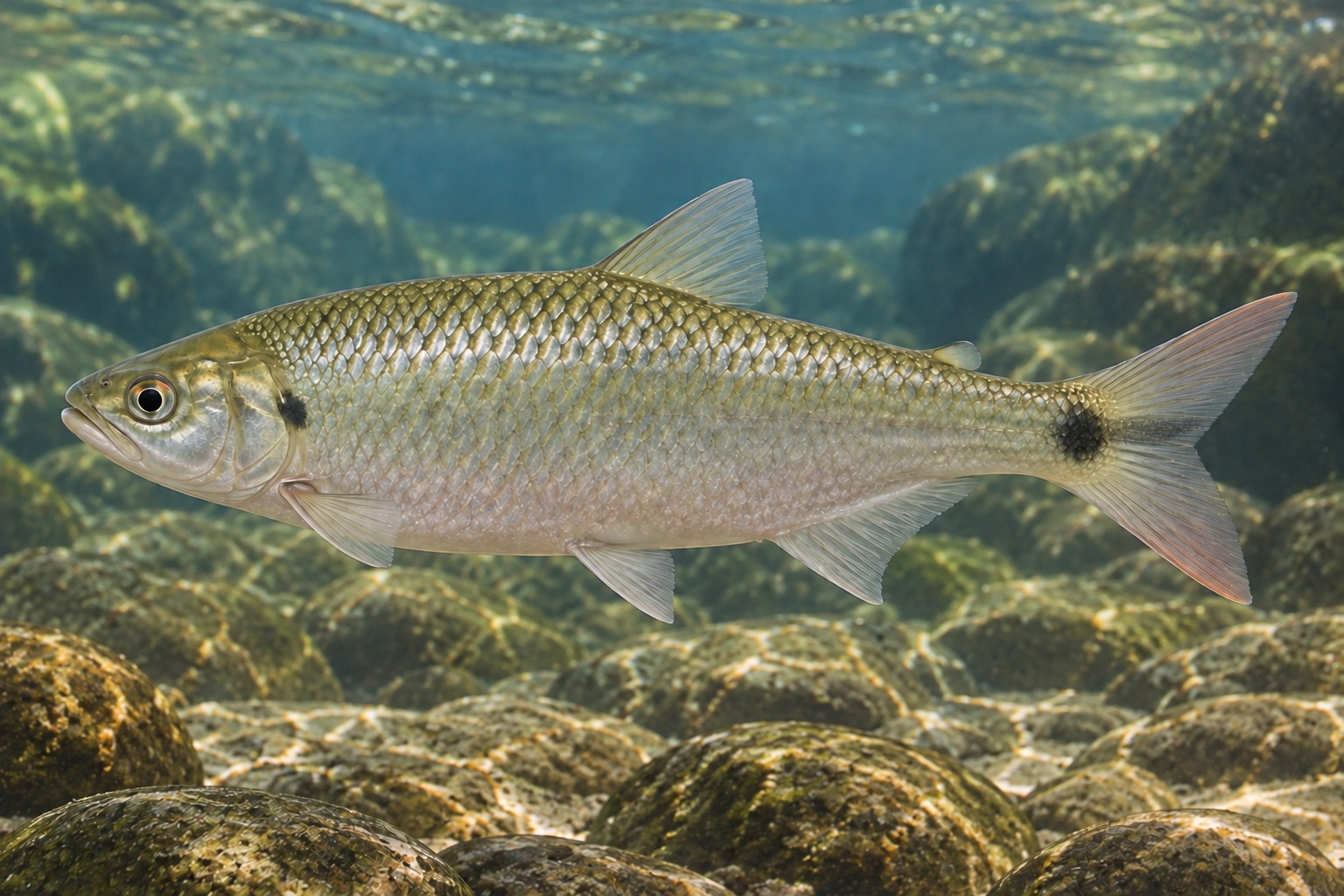
Basin inventories and the Convenio BIO provide records of native fish. Research on the Porce’s ecosystem services helps examine their possible role as food, without treating every catchable fish as a species whose consumption has been demonstrated.169, 189, 190
The illustrations were reviewed against identified photographs, plates and descriptions in the cited sources. They are AI recreations: useful for comparing forms, but not substitutes for taxonomic identification. Names from the POMCA are retained as recorded; uncertainties are noted in each entry.
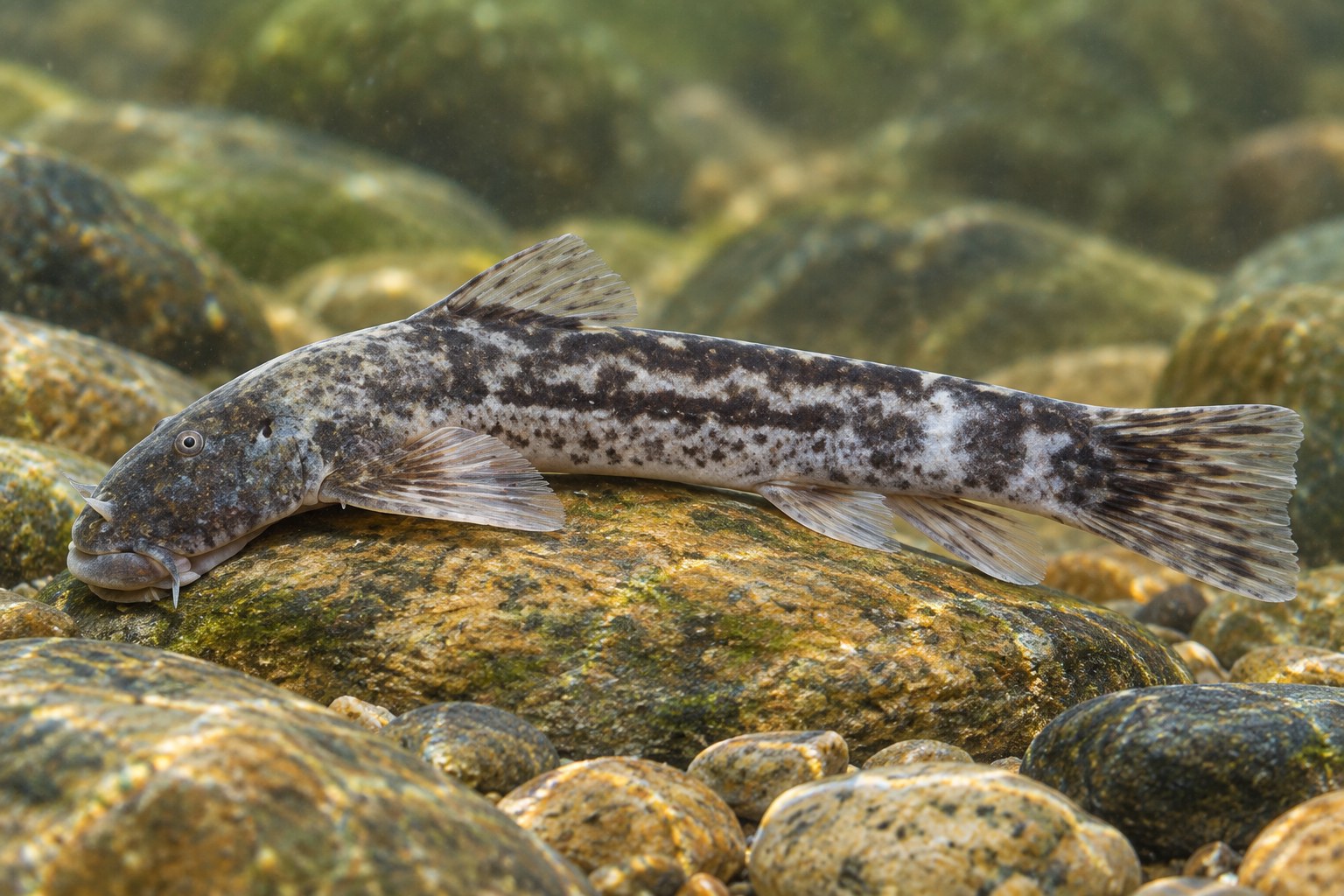
Astroblepus chapmani. Proyecto AD + OpenAI, 2026 · AI recreation reviewed against identified sources. Not a photograph or a diagnostic identification plate.
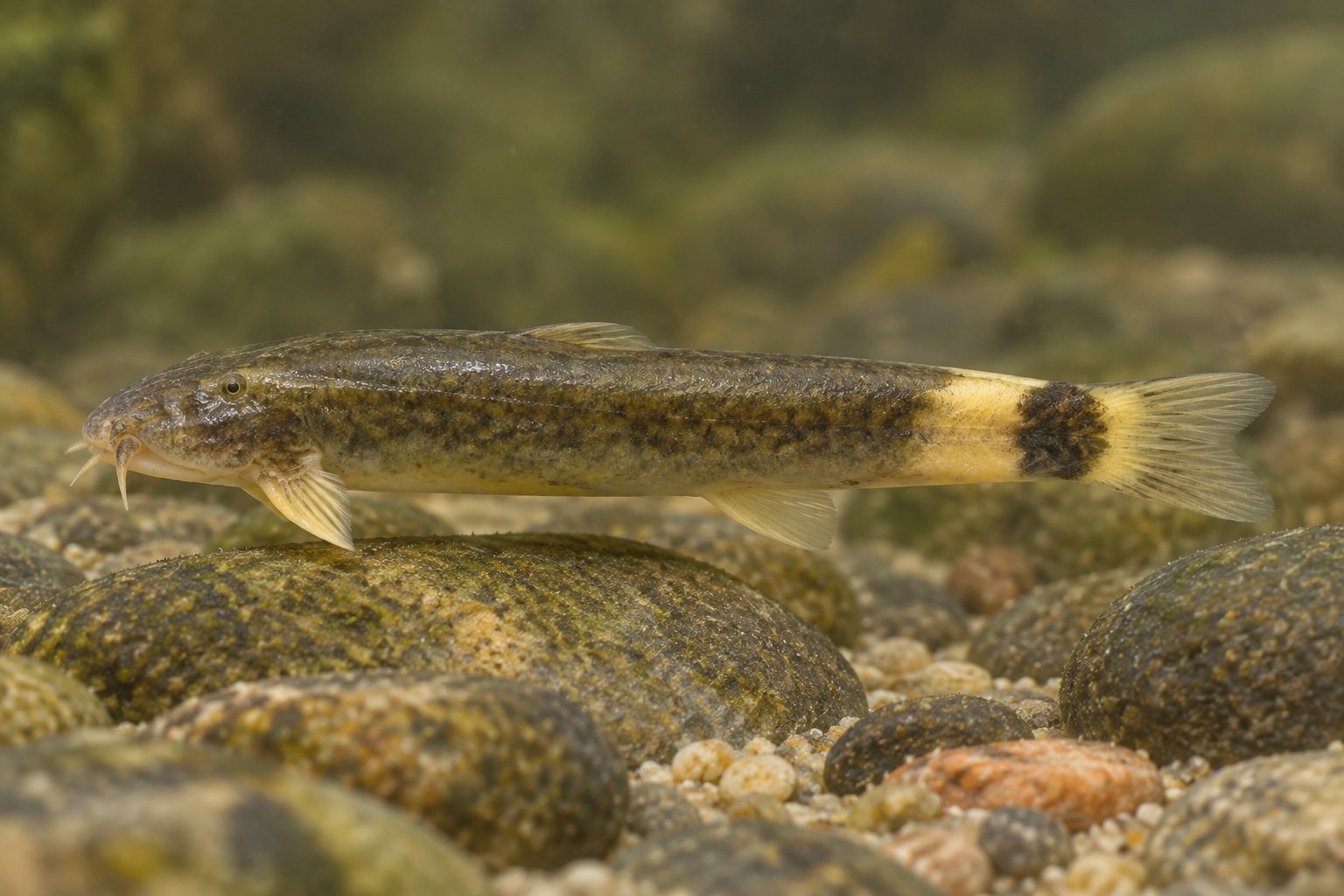
Corroncho
Astroblepus chapmani
Capture recorded in the Aburrá basin characterisation (POMCA, 2016), table 458, p. 1388.169
Very low adipose fin and a mottled pattern. Visual reference: Porce guide, p. 48.170
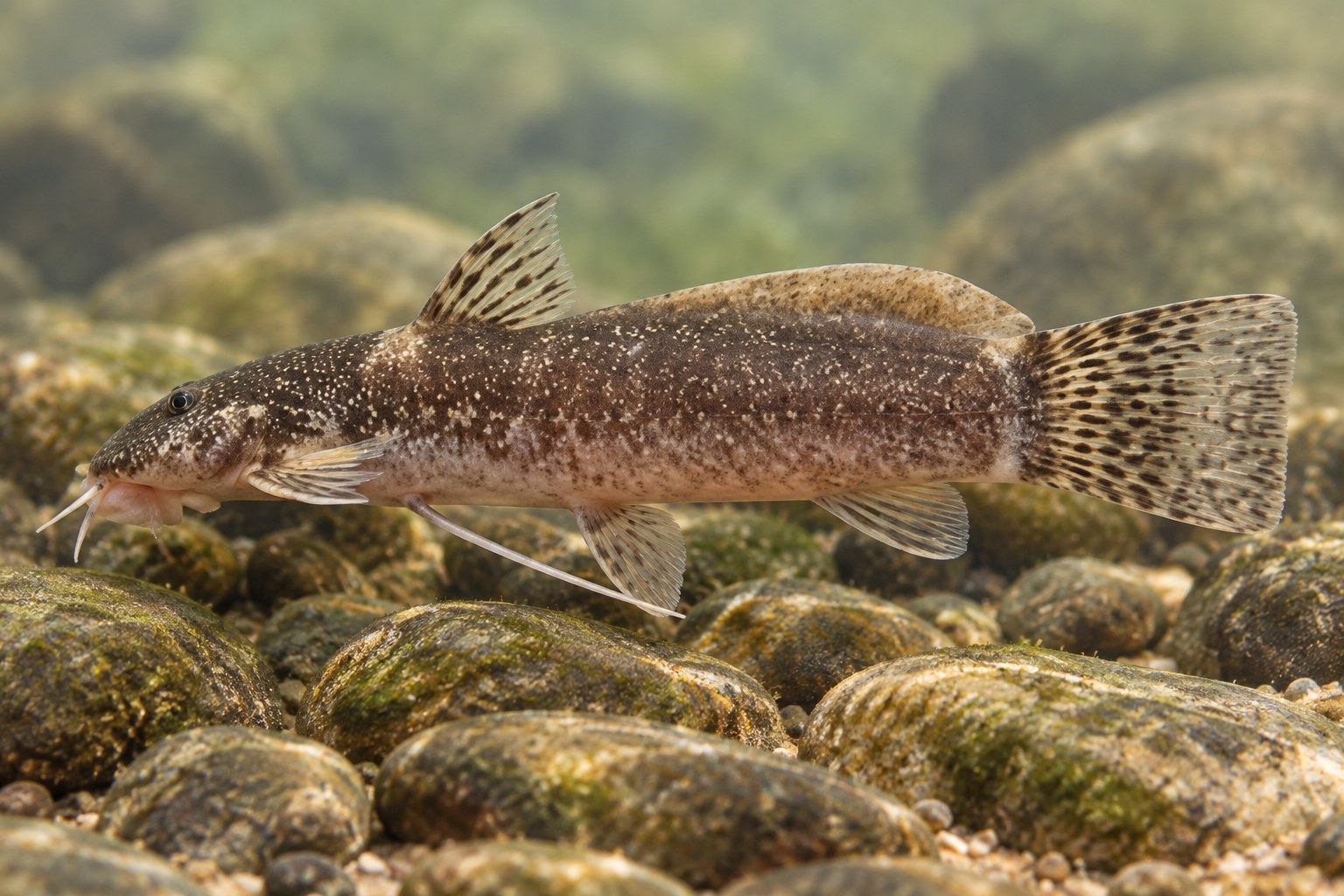
Astroblepus micrescens. Proyecto AD + OpenAI, 2026 · AI recreation reviewed against identified sources. Not a photograph or a diagnostic identification plate.
Corroncho
Astroblepus micrescens
Capture recorded in the Aburrá basin characterisation (POMCA, 2016), table 458, p. 1388.169
High, extended adipose fin, fine mottling and elongated leading fin rays. Reference: Porce guide, p. 56.170
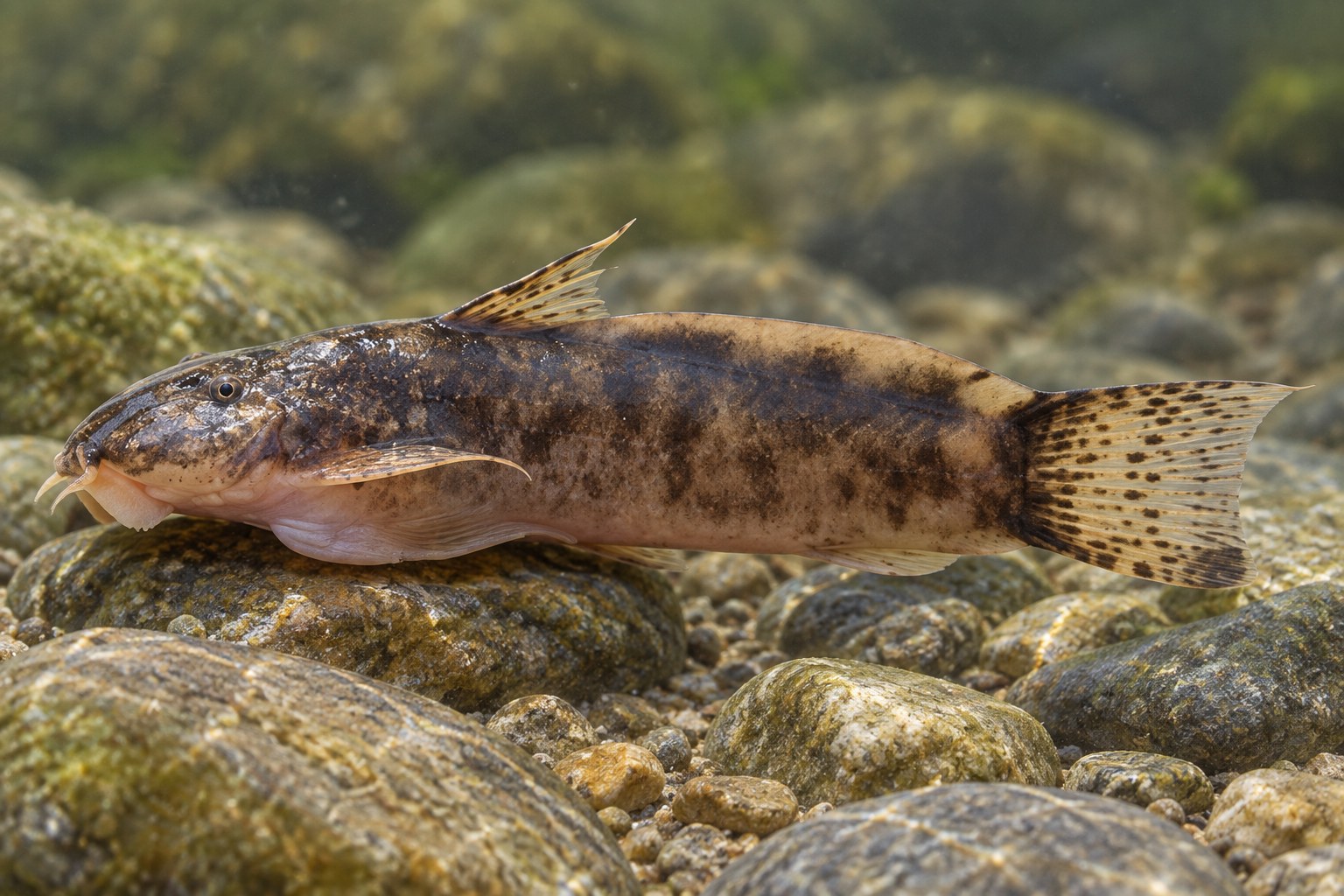
Astroblepus grixalvii. Proyecto AD + OpenAI, 2026 · AI recreation reviewed against identified sources. Not a photograph or a diagnostic identification plate.
Corroncho
Astroblepus grixalvii
Capture recorded in the Aburrá basin characterisation (POMCA, 2016), table 458, p. 1388.169
Flattened head, broad patches and a long, fleshy adipose fin. Reference: Porce guide, p. 51.170
Astroblepus nicefori. Proyecto AD + OpenAI, 2026 · AI recreation reviewed against identified sources. Not a photograph or a diagnostic identification plate.
Corroncho
Astroblepus nicefori
Capture recorded in the Aburrá basin characterisation (POMCA, 2016), table 458, p. 1388.169
Recreation based on the specimen photographed at Coromoro, Santander: appendix 7, figure f. That image guides the form; the local record comes from the POMCA.191
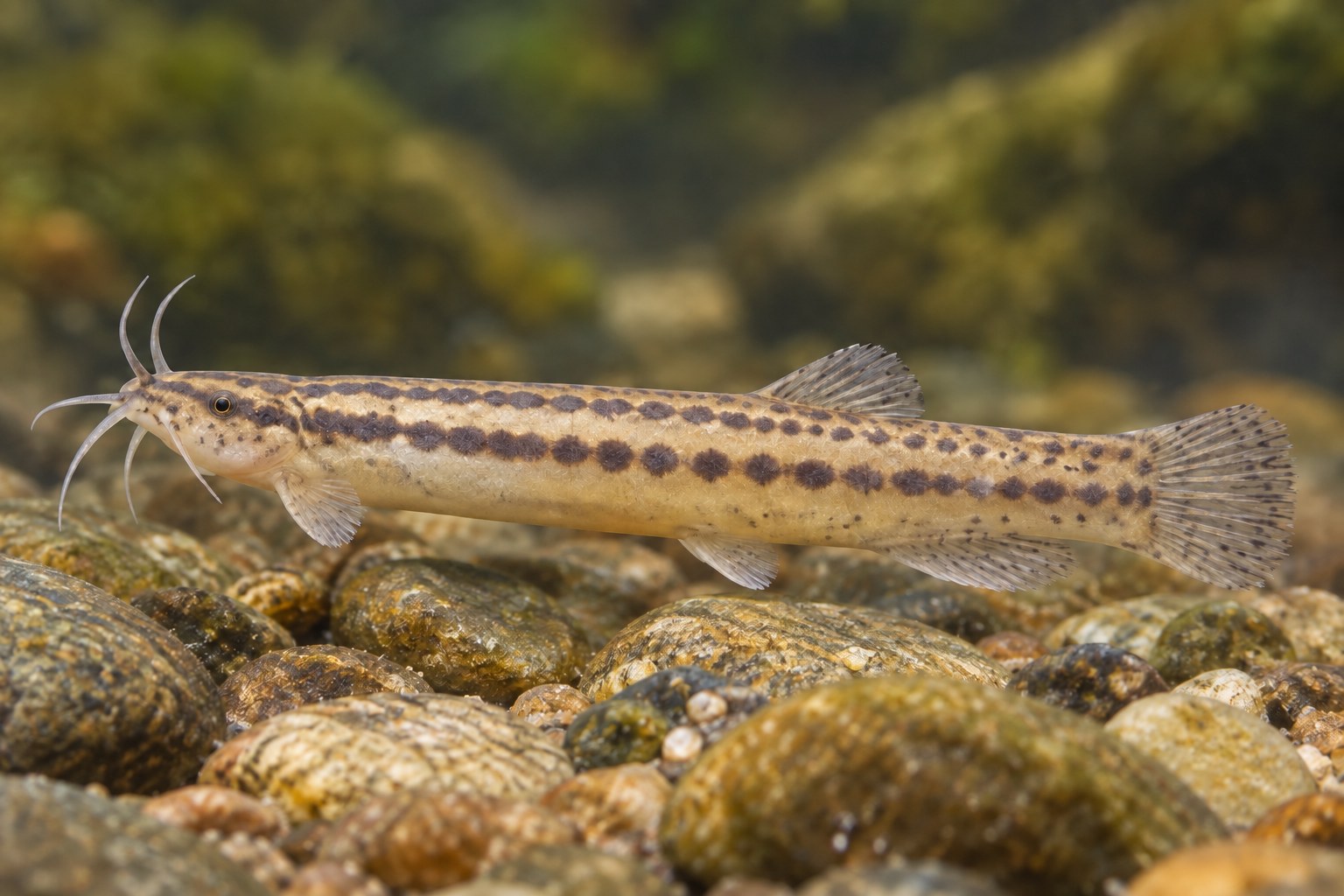
Trichomycterus chapmani. Proyecto AD + OpenAI, 2026 · AI recreation reviewed against identified sources. Not a photograph or a diagnostic identification plate.
Bagrecito (small catfish)
Trichomycterus chapmani
Capture recorded in the Aburrá basin characterisation (POMCA, 2016), table 458, p. 1388.169
Elongated body with rows of spots and a dorsal fin positioned towards the rear; no adipose fin. Reference: Porce guide, p. 42.170
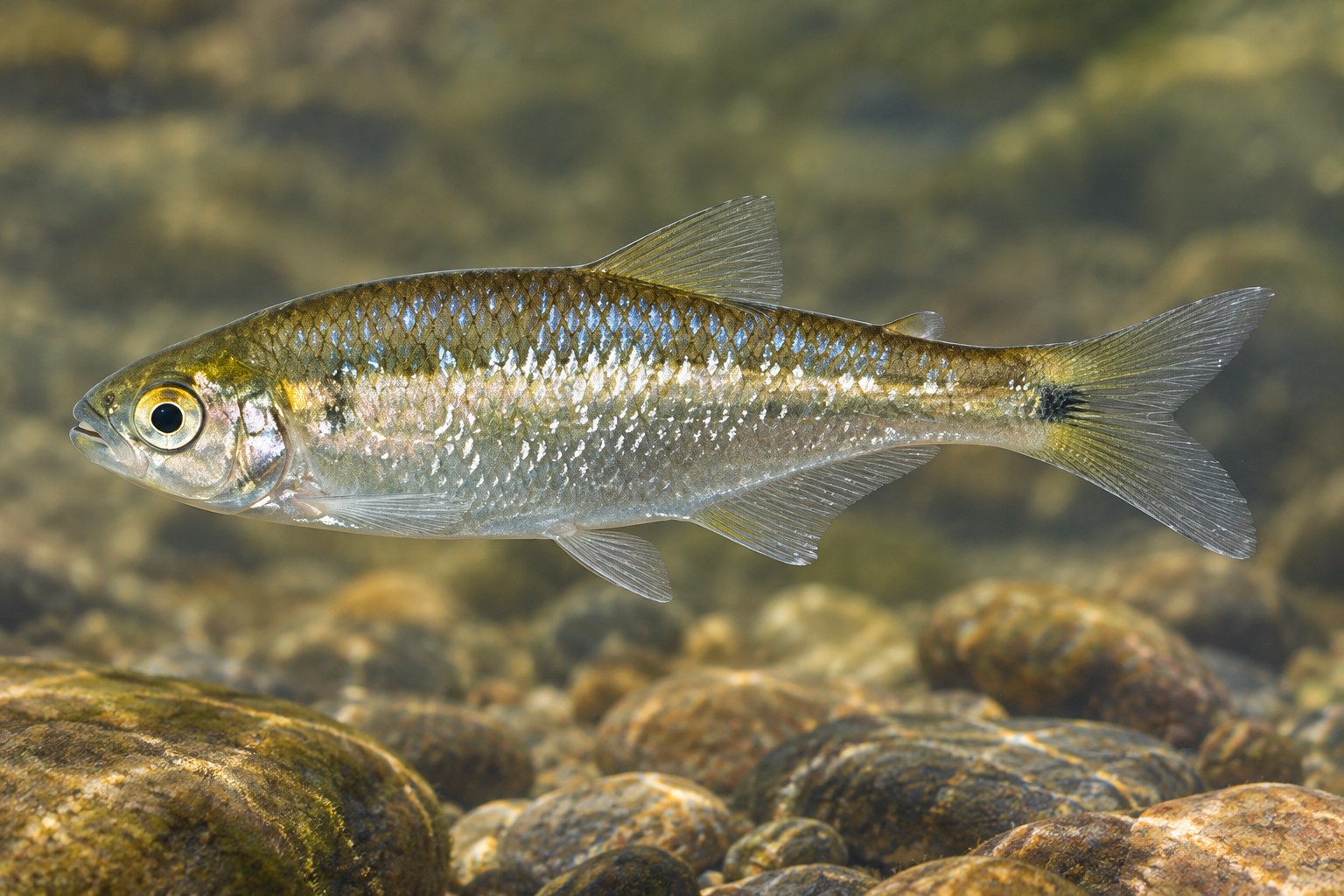
Bryconamericus caucanus. Proyecto AD + OpenAI, 2026 · AI recreation reviewed against identified sources. Not a photograph or a diagnostic identification plate.
Freshwater sardina
Bryconamericus caucanus
Capture recorded in the Aburrá basin characterisation (POMCA, 2016), table 458, p. 1388.169
Elongated, silvery body, yellowish tail base and a central dark patch. The revision retains these general features; it does not validate scale or fin-ray counts. Reference: Porce guide, p. 32.170
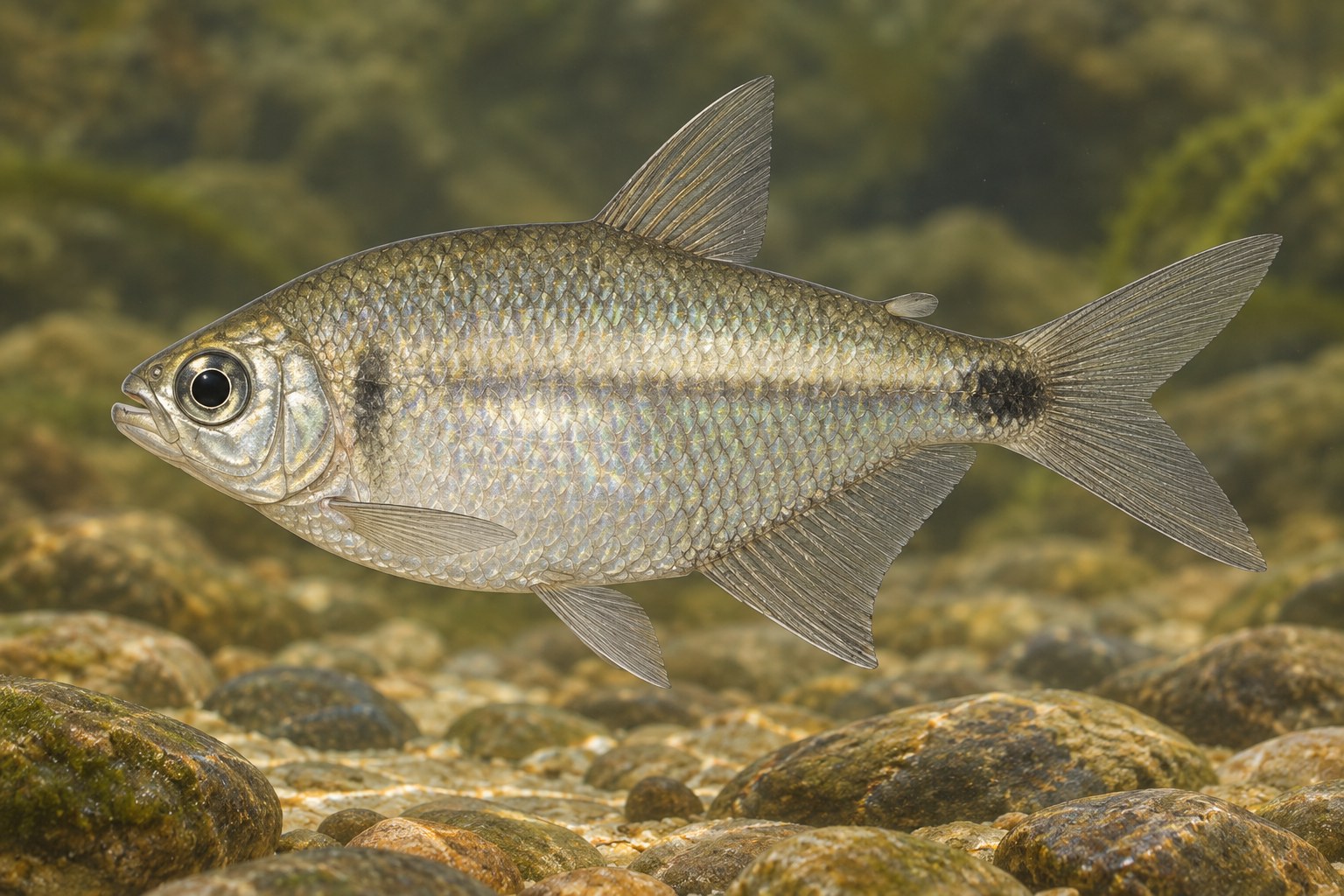
Hyphessobrycon inconstans. Proyecto AD + OpenAI, 2026 · AI recreation reviewed against identified sources. Not a photograph or a diagnostic identification plate.
Freshwater sardina
Hyphessobrycon inconstans
Capture recorded in the Aburrá basin characterisation (POMCA, 2016), table 458, p. 1388.169
Form reviewed against figure 4 of the original 1907 description: a deep body, long anal fin and a tail spot that does not extend onto the middle fin rays. Colour is interpretative: the source is a monochrome plate, not a photograph of a local specimen.192
The name follows the POMCA. The taxonomic catalogue notes uncertainty about type locality and distribution; the inventory specimens warrant re-examination.193
Proyecto AD + OpenAI, 2026 · AI recreation. Illustrative image, not a photographic record.
Mojarra
Caquetaia umbrifera
Capture recorded in the Aburrá basin characterisation (POMCA, 2016), table 458, p. 1388.169
The POMCA lists it under the name Kronoheros umbrifer.
Proyecto AD + OpenAI, 2026 · AI recreation. Illustrative image, not a photographic record.
Mojarra
Andinoacara latifrons
Capture recorded in the Aburrá basin characterisation (POMCA, 2016), table 458, p. 1388.169
Astroblepus dux. Proyecto AD + OpenAI, 2026 · AI recreation reviewed against identified sources. Not a photograph or a diagnostic identification plate.
Capitán de Medellín
Astroblepus dux
The Convenio BIO reported its rediscovery in Santa Elena stream in December 2023.190
Recreation based on photographs 19 and 20 in the 2025 Porce guide: lateral view and ventral mouth.194
Identification unresolved
Bagrecito de Medellín
Trichomycterus medellinensis
Name published by Posada (1909), included in the 2020 update of the Colombian checklist.195 EPM’s 2023 news item mentions it among the Convenio BIO’s findings.190
However, the 2025 field guide by the Grupo de Ictiología and collaborators identifies the illustrated small catfish as Trichomycterus caliensis (figure 17). This discrepancy requires the record to be reviewed; it does not establish that the two names are synonyms.194
Species-specific illustration pending. No image with a verifiable identification of T. medellinensis was found. The generic recreation was removed to avoid assigning another species’ appearance to it.
Scope of the records. They document presence during the cited studies, not current abundance or pre-Hispanic consumption. The Porce research highlights profound changes to aquatic environments in the upper basin.189
One species, several memories of water
Sabaleta in the Aburrá–Porce
Brycon henni. AI recreation reviewed against the photograph and description in the EPM–Universidad de Antioquia guide, p. 38. Proyecto AD + OpenAI, 2026. Not a field photograph or a diagnostic identification plate.170
Sabaleta
Brycon henni
The EPM and Universidad de Antioquia guide to fish of the Porce canyon records this species in the river, streams and reservoirs of the study area. This is regional evidence, whose scope must not automatically be extended to every stretch of the Aburrá.170
There is an explicit reference for the northern stretch of the Aburrá River. In February 2014, El Colombiano reported a statement by Víctor Vélez Bedoya, Wildlife Coordinator at the Área Metropolitana, about sabaleta upstream of the stretch known as the Porce. The article does not identify a stream or sampling point in Barbosa.196
Head proportions, the patch on the gill cover, the red above the eye and the central tail pigmentation were reviewed. View the illustrated reference, p. 38.
Family memory · around 1988
Fishing near what is now Parque de las Aguas
My father and grandfather fished in the Aburrá River when I was about eight years old and brought sabaleta home.
Read the Spanish text used for this translation
Mi padre y mi abuelo pescaban en el río Aburrá cuando yo tenía unos ocho años y llevaban sabaletas a la casa.
The participant dates this memory to around 1988, on the stretch of river beside what is now Parque de las Aguas. Family account shared with Proyecto AD on 7 October 2026; wording standardised from the participant’s messages and clarifications. Translated from Spanish.
This is a situated oral memory of fishing for household use. ‘Sabaleta’ is the remembered name: no specimens or photographs are preserved here to verify its biological identification. The date refers to the narrated experience, not to an observation of fishing in 2026.
Other references and what they establish
A conversation with anglers · 2021
The video Pesca de Sabaleta y su conservación, published by ImportaExpertos on 13 July 2021, presents a conversation with Juan Diego Monsalve. Between 42:51 and 43:17 the discussion addresses sabaleta fishing near Medellín.197 The review used the automatic transcript, which contains errors in place names; without checking the audio, the passage is not assigned to a particular tributary in Barbosa.
The Concepción webpage
Visita Concepción provides information on local fishing and mentions sabaleta in the Porce system. The reference to the road towards Barbosa appears in the caption of an image of Uvita; it does not, by itself, establish a record in an Aburrá tributary in Barbosa. It is retained as local public-information context, separate from sources used for scientific identification.198
Abundance, protein and population: rereading Burcher from Aburrá
In ‘Ecología de los caribes’ (1995), Priscilla Burcher de Uribe relates fish availability to the size and distribution of settlements. On page 92, she argues that pressure on resources encouraged settlements to separate, and links warfare to protein supply. Drawing on Daniel Gross, she uses an average requirement of 50 grams a day and states that ‘there can be no settlements of more than two thousand people’ among groups dependent on fishing. Her approach invites questions about how populations were fed; its figures and explanations require testing in specific contexts.199
The 50 grams: a reference, not a universal ration
The FAO/WHO/UNU consultation sets a safe protein intake level for healthy adults of 0.83 grams per kilogram of body weight per day: approximately 50 grams for a person weighing 60 kilograms. This reference is intended to meet the requirements of almost all healthy adults, not to define an identical minimum for every individual. Age, weight, pregnancy and breastfeeding affect requirements.200 WHO recognises animal and plant sources and notes that protein digestibility and quality also matter.201
Fifty grams of protein are not the same as fifty grams of meat, nor must all that protein come from fish. As a hypothetical exercise, 2,000 people at 50 grams each would require a total of 100 kilograms of protein a day. If half came from other foods, fish would need to supply 50 kilograms of protein. This calculation illustrates why knowing the diet matters: it does not represent an actual Aburrá population or allow nutritional requirements to be converted into kilometres of river without measuring sustainable catches, losses and edible portions.
Is there a limit of 2,000 inhabitants for fishing settlements?
Overexploitation can reduce available resources. That risk does not, however, imply a universal maximum number of inhabitants per settlement. Environmental productivity, seasonality, capture techniques, preservation, exchange and access rules alter the possible supply. An extensive floodplain and an Andean stream do not necessarily offer the same resources per kilometre. Village size, regional population and population density per unit area are also different measures.
An archaeological study published in 2024 documents fish-trapping canals and ponds at Crooked Tree, Belize. Its authors estimate an annual supply for around 3,700 to more than 25,000 people, depending on yields, assuming consumption of 40 kilograms of fish per person per year and simultaneous operation of the facilities. These are estimates, not a census; nor do they represent all the protein needed. The study does not demonstrate a single settlement of that size, but challenges the idea of a fixed fishing capacity independent of technology and landscape.202
Contemporary evidence also shows the effects of management: a study of 83 Amazonian lakes found averages of around 305 arapaima in lakes protected by communities, compared with nine in open-access lakes. These are numbers of fish, not people fed, but they show that the organisation of resource use can substantially alter availability.203 Likewise, protein needs alone are insufficient to explain warfare or cannibalism: that explanation requires independent evidence for each society.
Aburrá: protein supplied by several foods
Sardella describes ‘enough maize food for more than two months’ and ‘an immense abundance of food’, listing beans, guinea pigs and dogs. The passage supports substantial availability of stored food at the time of the conquest; it does not measure rations or each food’s nutritional contribution.20 Maize and beans both provide protein, and their amino-acid profiles complement one another, as the FAO notes. In sufficient quantities and within a diet that meets energy needs, this combination can contribute substantially to protein supply.166
Guinea pigs were another food source explicitly mentioned by the chronicler. Proyecto AD argues that at least some dogs were also intended for consumption, because they appear in the list of provisions. This hypothesis has textual support, although Sardella does not describe their preparation or consumption. Fishing may have supplemented the diet, but the passage does not mention it, and species recorded in the basin today do not allow the quantity of fish eaten in 1541 to be calculated. We do not know what proportion of protein came from each resource, or how often animals were eaten.
Abundance and population: what we can support
The strongest hypothesis is a diversified food economy, able to accumulate reserves and combine plant and animal protein. This makes it plausible that stable communities could be sustained and inhabitants mobilised from several settlements. The abundance described by Sardella is a positive indication of food-related well-being, but does not demonstrate that every person received 50 grams of protein daily throughout the year, or allow the Valley’s population to be calculated. Testing this requires local data on production, storage, plant and animal remains, diet and health. Burcher’s enduring question is how resources and inhabitants were balanced; answering it for Aburrá requires studying the whole diet and its distribution, without imposing a ceiling of 2,000 people in advance.
References
Vancouver referencing: numbering follows first appearance across the project. Proyecto AD bibliography.
Sardella JB. Relación del descubrimiento de las provincias de Antiochia por Jorge Robledo [account dating from 1541]. Passage reproduced and adapted in: Llano Restrepo MA. La fundación de Medellín: recuento cronológico, controversias y documentos. Repert Hist [Internet]. 2025;(211):41-43 [cited 2026 Oct 1]. Available from: https://historiantioquia.org/wp-content/uploads/2026/01/Academia-Antioquena-de-Historia-Repertorio-Historico-211-julio-diciembre-2025-web-pagina-individual.pdf View source The edition consulted refers to Repertorio Histórico. 1921;3(8-10):322-324, Colección Muñoz, volume 82.
Food and Agriculture Organization of the United Nations. Maize in human nutrition [Internet]. Rome: FAO; 1992 [cited 2026 Oct 1]. Chapter 8, Improvement of maize diets. (FAO Food and Nutrition Series; 25). Available from: https://www.fao.org/4/T0395E/T0395E0c.htm View source
Instituto de Investigación de Recursos Biológicos Alexander von Humboldt, Área Metropolitana del Valle de Aburrá. Fototrampeo Área Metropolitana del Valle de Aburrá [dataset on the Internet]. Version 1.1. Medellín: Área Metropolitana del Valle de Aburrá; 2023 [published 2024 Apr 30; cited 2026 Oct 7]. doi:10.15472/wfdfxy. View source
Restrepo Isaza A, et al. Guía de especies del SILAP de Envigado. Alcaldía de Envigado, EPM; 2023. 2022 monitoring tables, p. 23–24. [cited 2026 Oct 7]. View source
Corporación Autónoma Regional de las Cuencas de los Ríos Negro y Nare, Corporación Autónoma Regional del Centro de Antioquia, Área Metropolitana del Valle de Aburrá. Actualización del Plan de Ordenación y Manejo de la Cuenca Hidrográfica del río Aburrá: caracterización físico-biótica. 2016-2018 [Internet; cited 2026 Aug 23]. Available from: https://www.cornare.gov.co/POMCAS/planes-de-ordenacion/DocumentosFasesRioAburra/2.3.T_IV_CaracFisicoBio_vf.pdf View source
Jiménez-Segura LF, Álvarez J, Ochoa LE, Loaiza A, Londoño JP, Restrepo D, et al. Guía ilustrada peces cañón del río Porce, Antioquia [Internet]. Medellín: EPM, Universidad de Antioquia; 2014 [cited 2026 Oct 7]. p. 32, 38, 42, 48, 51, 56. View source
The Metropolitan Museum of Art. Seated dog: Colima, 200 a. C.–300 d. C. [Internet]. New York: The Metropolitan Museum of Art; [date unknown] [cited 2026 Oct 1]. Collection catalogue; inventory number 2007.345.1. Available from: https://www.metmuseum.org/art/collection/search/318964 View source Comparative reference for the seated pottery dog; the recreation does not reproduce this object exactly.
Museo Larco. Botella gollete asa estribo escultórica representando animal (perro sin pelo) [Internet]. Lima: Museo Larco; [date unknown] [cited 2026 Oct 1]. Collection catalogue; record ML021952. Chimú culture; Lambayeque Valley. Available from: https://coleccion.museolarco.org/detail/23106 View source Chimú comparative reference; it does not automatically identify the recreated pottery as Moche.
Museo Larco. Perro peruano sin pelo [Internet]. Lima: Museo Larco; [date unknown] [cited 2026 Oct 1]. Available from: https://www.museolarco.org/galeria/perro-peruano-sin-pelo/ View source
Proyecto Especial Naylamp–Lambayeque, Ministerio de Cultura del Perú. Conoce a los Perros Sin Pelo de los museos lambayecanos [Internet]. Ministerio de Cultura; 2022 Jun 13 [cited 2026 Oct 1]. Available from: https://www.gob.pe/institucion/naylamp/noticias/620546-conoce-a-los-perros-sin-pelo-de-los-museos-lambayecanos View source Visual reference for contemporary hairless dogs. Photographs were consulted as references, not reproduced.
Instituto Nacional de Antropología e Historia. Xoloitzcuintle: compañero en el viaje al Mictlán [Internet]. Ciudad de México: INAH; 2025 Nov 11 [cited 2026 Oct 1]. Photograph by Fernando Rodríguez García. Available from: https://inah.gob.mx/foto-del-dia/xoloitzcuintle-companero-en-el-viaje-al-mictlan View source
Fernández de Oviedo y Valdés G. Historia general y natural de las Indias. Primera parte [Internet]. Biblioteca Antológica; [digital edition date unknown] [cited 2026 Oct 1]. Book XII, chapters I and V. Available from: https://www.biblioteca-antologica.org/es/wp-content/uploads/2018/03/FERN%C3%81NDEZ-DE-OVIEDO-Historia-general-y-natural-I.pdf View source
Casas B de las. Historia de las Indias. Tomo I [Internet]. Madrid: Imprenta de Miguel Ginesta; 1875 [work written c. 1527–1561; cited 2026 Oct 21]. Book I, chapters XLII and CXX. Available from: https://www.cervantesvirtual.com/obra/historia-de-las-indias-tomo-1/ View source
Landa D de. Relación de las cosas de Yucatán [Internet]. Madrid: Establecimiento Tipográfico de Fortanet; 1900 [manuscript c. 1566; cited 2026 Oct 21]. Chapters XXXII and L. Available from: https://www.cervantesvirtual.com/obra/relacion-de-las-cosas-de-yucatan/ View source
Sahagún B de. Historia general de las cosas de Nueva España (Códice Florentino). Tomo III [Internet]. México: Imprenta del Ciudadano Alejandro Valdés; 1830 [manuscript c. 1577; cited 2026 Oct 21]. Book XI, chapter I, § 4. Available from: https://www.cervantesvirtual.com/obra/historia-general-de-las-cosas-de-nueva-espana-tomo-3/ View source
Vega G de la (Inca Garcilaso). Comentarios reales de los Incas. Primera parte [Internet]. Lisboa: Pedro Crasbeeck; 1609 [cited 2026 Oct 21]. Book VIII, chapter XVI (De los perros que tenían los indios). Available from: https://www.cervantesvirtual.com/obra/comentarios-reales-de-los-incas/ View source
Cobo B. Historia del Nuevo Mundo. Tomo II [Internet]. Sevilla: Imprenta de E. Rasco, Sociedad de Bibliófilos Andaluces; 1891 [manuscript 1653; cited 2026 Oct 21]. Book IX, chapter LIII, p. 326–329. Available from: https://www.cervantesvirtual.com/obra/historia-del-nuevo-mundo-tomo-2/ View source
Museo Nacional de Arqueología, Antropología e Historia del Perú. Fauna y flora: perros prehispánicos [Internet]. Lima: Ministerio de Cultura; [date unknown] [cited 2026 Aug 23]. Available from: https://mnaahp.cultura.pe/santuario-arqueologico/fauna-flora View source
Ní Leathlobhair M, Perri AR, Irving-Pease EK, Witt KE, Linderholm A, Haile J, et al. The evolutionary history of dogs in the Americas. Science. 2018;361(6397):81-85. doi:10.1126/science.aao4776. View source
Tomczyk W, Giersz M, Więckowski W, Pimentel Nita R, Ebert CE. The many lives of companion species: a zooarchaeological and isotopic research on Wari dog remains from Castillo de Huarmey, Peru. J Anthropol Archaeol. 2026;82:101767. doi:10.1016/j.jaa.2026.101767. View source
Eraso SE. Cuy asado: un manjar que se disfruta alrededor de la tulpa [photo essay on the Internet]. Radio Nacional de Colombia. 2020 Dec 16 [cited 2026 Oct 7]. View source
Sistema de Información Turística de Nariño. Zonas gastronómicas: cuy asado [Internet]. Pasto: Gobernación de Nariño; [date unknown] [cited 2026 Aug 23]. Available from: https://situr.narino.gov.co/atractivos-turisticos/zonas-gastronomicas View source
Alcaldía de Medellín. Propuesta para la gestión integral de la biodiversidad y los servicios ecosistémicos en Medellín. 2014. p. 55. [cited 2026 Oct 7]. View source
Muñetón Jácome CM. Aves del Valle de Aburrá: grafías a partir de la experiencia personal [degree dissertation]. Medellín: ITM; 2023. Appendix 1, p. 95, based on Guía fotográfica de las aves del Valle de Aburrá. [cited 2026 Oct 7]. View source
Instituto Humboldt. Seguridad alimentaria del 80 % de la población rural de Latinoamérica depende de la caza y pesca de subsistencia. 2022. [cited 2026 Oct 7]. View source
Corporación Autónoma Regional del Valle del Cauca. CVC incautó 32 kilos de carne de monte en aeropuerto Alfonso Bonilla Aragón. 2017. [cited 2026 Oct 7]. View source
Corantioquia. Liberación de individuos de fauna silvestre. [date not recorded]. Reference to Cuniculus taczanowskii. [cited 2026 Oct 7]. View source
Sánchez Karste F, Carbone M. Mamíferos del Parque Nacional Cajas [Internet]. Cuenca: ETAPA EP, Parque Nacional Cajas; 2012 [cited 2026 Oct 7]. p. 138-140. View source
Sánchez O, Pineda MA, Benítez H, Berlanga H, Rivera-Téllez E. Guía de identificación para las aves y mamíferos silvestres de mayor comercio en México protegidos por la CITES. 2nd ed. Vol. II, Mamíferos [Internet]. México: SEMARNAT, CONABIO; 2015 [cited 2026 Oct 7]. p. 361-365. View source
Huertas Rodríguez JC, Sanín Acevedo C, Cataño A. Los peces y sus servicios ecosistémicos en la cuenca del río Porce. Actual Biol. 2018;40(108):72-84. doi:10.17533/udea.acbi.v40n108a07. View source
Empresas Públicas de Medellín, Universidad de Antioquia. Convenio BIO entrega importantes hallazgos ambientales para la región. Medellín: EPM; 2023 Dec 11 [Internet; cited 2026 Aug 23]. Available from: https://www.epm.com.co/institucional/sala-de-prensa/noticias-y-novedades/convenio-bio-entrega-importantes-hallazgos-ambientales-para-la-region/ View source
Beltrán Tirado VA. Diversidad y abundancia íctica en dos ríos del municipio de Coromoro, Santander, Colombia [degree dissertation on the Internet]. Bucaramanga: Universidad Industrial de Santander; 2022 [cited 2026 Oct 7]. Appendix 7, p. 69, figure f. View source
Eigenmann CH, Ogle F. An annotated list of characin fishes in the United States National Museum and the Museum of Indiana University, with descriptions of new species. Proc U S Natl Mus. 1907;33(1556):1-36. p. 17, fig. 4. doi:10.5479/si.00963801.33-1556.1. View source
Fricke R, Eschmeyer WN, Van der Laan R, editors. Eschmeyer’s catalog of fishes: genera, species, references [Internet]. San Francisco: California Academy of Sciences; 2026 [updated 2026 Aug 13; cited 2026 Oct 7]. Hyphessobrycon inconstans. View source
Londoño-López JL, Ospina-Pabón JG, García-Melo JE, Do Nascimiento C, Galeano-Moreno AF, Restrepo-Santamaría D, et al. Peces de ambientes acuáticos de montaña en la subcuenca del río Porce [field guide on the Internet]. Chicago: Field Museum; 2025 Nov [cited 2026 Oct 7]. Guide 1714, version 1. p. 2, figures 17, 19-20. View source
Asociación Colombiana de Ictiólogos. Actualización listado de peces de agua dulce de Colombia: detalles de actualización 2020, versión 2.12 [Internet]. 2020 [cited 2026 Oct 7]. p. 4-5. View source
El Colombiano. En el río Medellín viven hasta iguanas y nutrias. 2014 Feb 22. Statements by Víctor Vélez Bedoya, Área Metropolitana del Valle de Aburrá. [cited 2026 Oct 7]. View source
ImportaExpertos. Pesca de Sabaleta y su conservación 13-07-2021 [video]. YouTube; 2021 Jul 13. Passage reviewed: 42:51–43:17, using automatic transcription rather than verification by listening. [cited 2026 Oct 7]. View source
Visita Concepción. Peces [Internet]. Information attributed on the page to Juan Diego Monsalve, Tiempo de Pesca. [date not stated]. [cited 2026 Oct 7]. View source
Burcher de Uribe P. Ecología de los caribes. Bol Antropol [Internet]. 1995 [cited 2026 Oct 1];9(25):91-99. Available from: https://revistas.udea.edu.co/index.php/boletin/article/download/343760/20803700/205797 View source
World Health Organization, Food and Agriculture Organization of the United Nations, United Nations University. Protein and amino acid requirements in human nutrition [Internet]. Geneva: World Health Organization; 2007 [cited 2026 Oct 1]. (WHO Technical Report Series; 935). Available from: https://iris.who.int/bitstream/handle/10665/43411/WHO_TRS_935_eng.pdf View source
World Health Organization. Healthy diet [Internet]. Geneva: World Health Organization; [date unknown] [cited 2026 Oct 1]. Available from: https://www.who.int/news-room/fact-sheets/detail/healthy-diet View source
Harrison-Buck E, Krause SM, Brouwer Burg M, Willis M, Perrotti A, Bailey K. Late Archaic large-scale fisheries in the wetlands of the pre-Columbian Maya Lowlands. Sci Adv. 2024;10(47):eadq1444. doi:10.1126/sciadv.adq1444. View source Additional link
Campos-Silva JV, Peres CA. Community-based management induces rapid recovery of a high-value tropical freshwater fishery. Sci Rep. 2016;6(1):34745. doi:10.1038/srep34745. View source